

Key Takeaways
- AI capabilities are evolving rapidly, especially in coding tasks.
- Next-gen nuclear power aims to offer safer and more affordable options.
- Investment in AI is pushing the need for energy in hyperscale data centers.
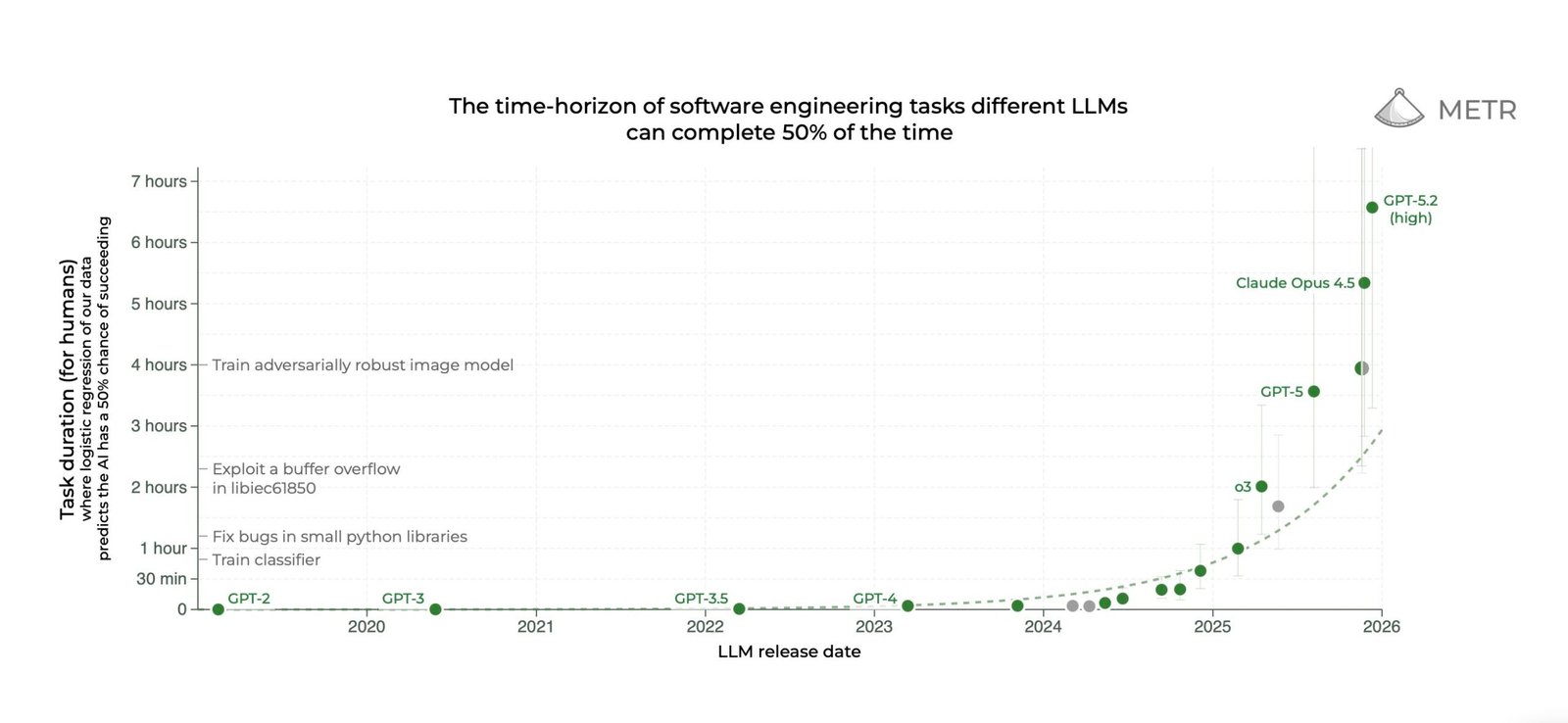
- The METR graph highlights the exponential acceleration of certain AI developments.
- Claude Opus 4.5 demonstrates significant advancements over its predecessors.

What We Know So Far
The Exponential Growth of AI
AI and nuclear power — The METR graph illustrates that particular AI capabilities are developing at an exponential rate, particularly in coding tasks. Recent advancements from notable companies like OpenAI and Google have led to a paradigm shift in AI capabilities.
Claude Opus 4.5, released in late November, has shown significant improvements over its predecessors, capturing industry attention with its performance. However, experts warn that the METR estimates of these models come with substantial error bars, raising concerns about their reliability.
What Underpins These Developments?
AI technologies today depend heavily on substantial energy supplies, prompting investments in hyperscale data centers. This rising demand for energy sets the stage for the exploration of next-generation nuclear power as a viable solution.
As AI companies focus on enhancing their computing capabilities, they are increasingly looking towards sustainable energy sources, including nuclear power, to meet their operational needs.
Key Details and Context
More Details from the Release
AI is driving investment in hyperscale data centers that require substantial energy supplies.
Next-generation nuclear power plants could be cheaper and safer than previous models.
The METR estimates of AI models come with substantial error bars, making their reliability questionable.
Claude Opus 4.5 was released in late November and showed significant improvements over previous models.
The METR graph suggests that certain AI capabilities are developing at an exponential rate.
Emerging Nuclear Technologies
Next-generation nuclear power plants have the potential to be safer and cheaper than their traditional predecessors. With advancements in technology, the public discourse has shifted to a more favorable view of nuclear energy.
Related image — Source: technologyreview.com — Original
“There are a bunch of ways that people are reading too much into the graph,”
AI’s role in this transformation is noteworthy, as investments in intelligent technologies foster discussions around cleaner, more reliable energy sources. AI’s synergy with nuclear power promises to change the landscape of energy consumption.
The Landscape of AI Investments
AI’s driving investment in hyperscale data centers, which are crucial for processing massive data sets, is paving the way for more robust energy solutions. The connection between AI and energy sustainability is becoming increasingly apparent.
Organizations are beginning to advocate for integrating AI with next-gen nuclear power to ensure that energy needs can be met sustainably, contributing to environmental goals.
What Happens Next
The Future of AI and Nuclear Power
The collaboration between AI advancements and nuclear energy technology is expected to unfold in the coming years. As companies continue to adopt next-gen nuclear solutions, the efficiency and safety of these plants is expected to likely improve, attracting more investment.

Related image — Source: technologyreview.com — Original
AI is expected to play a pivotal role in optimizing nuclear power generation, making plants more responsive to grid demands while maintaining safety protocols.
Challenges Ahead
While the potential is vast, challenges remain. There is considerable hype around AI capabilities, and some caution is necessary as the metrics from organizations like METR aren’t foolproof.
As noted by Sydney Von Arx, “You should absolutely not tie your life to this graph,” indicating a need for critical evaluation amidst excitement.
Why This Matters
The Implications for Future Energy Needs
The intersection of AI and nuclear power is a critical discussion point for future energy strategies. As we face increasing energy demands driven by AI technologies, exploring sustainable options becomes essential.
“I think the hype machine is expected to basically, whatever we do, just strip out all the caveats,”
Moreover, AI’s role in ensuring the safe and efficient operation of nuclear power plants is expected to be vital in addressing public concerns and regulatory challenges associated with nuclear energy.
A Shift in Public Perception
Public conversations around nuclear energy are shifting, with greater acknowledgment of its potential when paired with advanced technologies. Engaging with audiences online is critical for changing perspectives and fostering acceptance of next-gen nuclear solutions.
FAQ
As the interplay between AI and nuclear power continues to evolve, here are some frequently asked questions:
- What is the potential impact of AI on nuclear power? AI is expected to innovate in nuclear technology, driving efficiency and safety.
- Why is the METR graph significant? It illustrates exponential growth in AI capabilities, focusing on critical coding tasks.
- How does AI relate to energy requirements? AI technologies necessitate substantial energy, influencing investments in nuclear power.
- What advancements does Claude Opus 4.5 showcase? It marks significant improvements in AI performance compared to earlier models.
- Why are next-gen nuclear plants considered a solution? They promise lower costs and enhanced safety compared to traditional models.

