

Key Takeaways
- OpenEnv offers a framework for standardizing interactions between agents and real-world tools.
- The Turing Calendar Gym acts as a testing ground for AI agents handling complex scheduling tasks.
- Multi-step reasoning is key to agent performance, yet remains a challenge in practical applications.
- Agents require proper state management to perform effectively across multiple actions.
- Clear task framing and structured outputs are critical for maximizing agent success rates.
What We Know So Far
Introduction to OpenEnv
OpenEnv is an open-source framework designed to standardize the interaction between agents and real-world tools and workflows. This approach is crucial in making AI agents more efficient and reliable when operating in unpredictable environments.
Related image — Source: huggingface.co — Original
The framework facilitates a structured environment where both AI developers and researchers can evaluate their agents’ performances against real-world challenges, thereby promoting advances in the field of artificial intelligence.
Key Details and Context
More Details from the Release
OpenEnv aims to improve the reliability of agents in production by evaluating their performance under real-world constraints.
Structured outputs and clear documentation of required actions are essential for the effective operation of AI agents.
Framing tasks ambiguously reduces agent performance, leading to significant drops in success rates.
Agents can effectively use tools but require explicit schemas for reliable interaction and performance.
AI agents must manage state across multiple actions and extend their reasoning capabilities beyond simple tasks.
Multi-step reasoning is identified as a primary bottleneck for agents, affecting their performance in real-world environments.
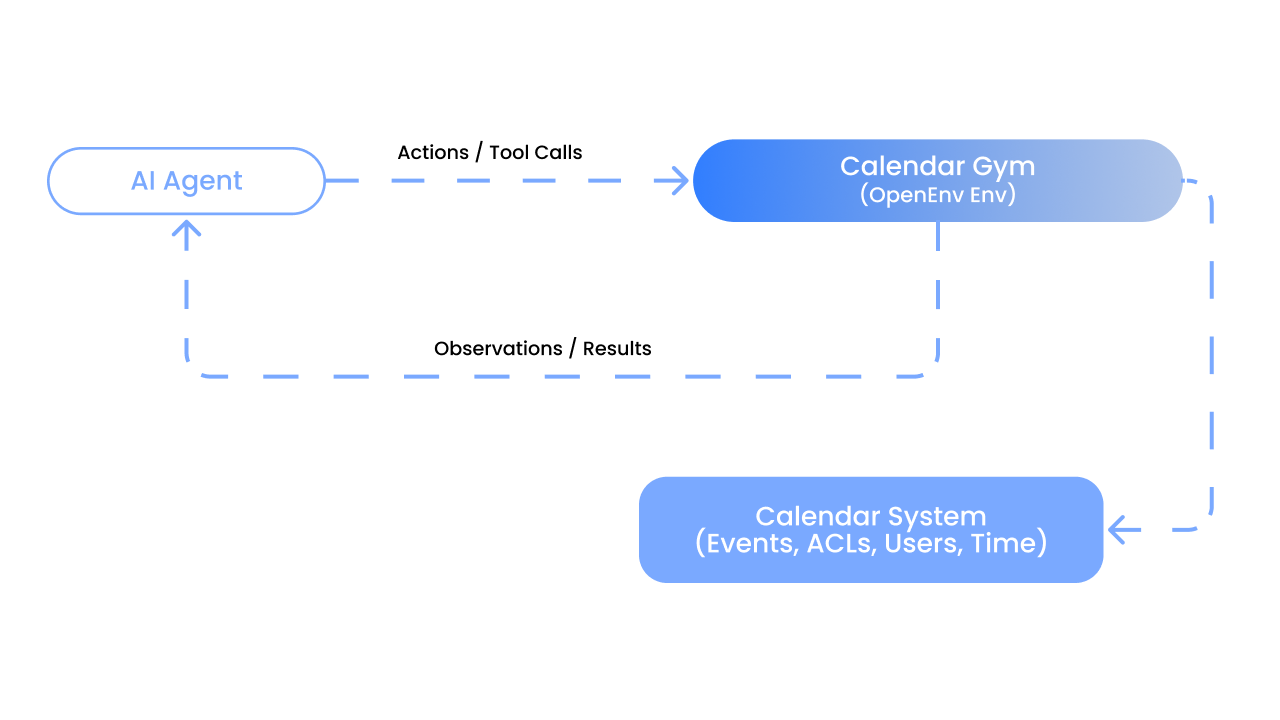
The Calendar Gym provided by Turing serves as a real-world testing environment for tool-using agents, focusing on complex scheduling tasks.
OpenEnv is an open-source framework designed to standardize the interaction between agents and real-world tools and workflows.
OpenEnv aims to improve the reliability of agents in production by evaluating their performance under real-world constraints.
Structured outputs and clear documentation of required actions are essential for the effective operation of AI agents.
Framing tasks ambiguously reduces agent performance, leading to significant drops in success rates.
Agents can effectively use tools but require explicit schemas for reliable interaction and performance.
AI agents must manage state across multiple actions and extend their reasoning capabilities beyond simple tasks.
Multi-step reasoning is identified as a primary bottleneck for agents, affecting their performance in real-world environments.
The Calendar Gym provided by Turing serves as a real-world testing environment for tool-using agents, focusing on complex scheduling tasks.
OpenEnv is an open-source framework designed to standardize the interaction between agents and real-world tools and workflows.
Turing Calendar Gym
The Turing Calendar Gym provided by Turing serves as a real-world testing environment for tool-using agents, focusing specifically on complex scheduling tasks. This setup allows agents to interact with existing task management workflows, creating a valuable resource for assessment and improvement.
Related image — Source: huggingface.co — Original
“Can this operate reliably in the real world?”
By utilizing such environments, developers can gather critical feedback on how their AI agents handle realistic scenarios, which in turn, informs better design and functionality in future iterations.
Challenges and Bottlenecks
Multi-step reasoning is identified as a primary bottleneck affecting agents’ performances in real-world environments. This issue manifests when agents must perform interconnected tasks that require an understanding of context and state management across various actions.
Moreover, framing tasks ambiguously can lead to significant drops in success rates, emphasizing the necessity for precise communication and clear action guides for optimal agent performance.
What Happens Next
Future Expectations for OpenEnv
OpenEnv aims to improve the reliability of agents in production by evaluating their performance under real-world constraints. This continuous assessment is expected to provide deeper insights into how agents can better adapt to complex task requirements.
Related image — Source: huggingface.co — Original
As the framework evolves, it’s expected that new features is expected to enhance agent interaction capabilities, streamline their workflows, and optimize their decision-making processes for real-world applications.
Why This Matters
Implications for AI Development
The implications of successful tool-using agents extend far beyond conventional applications. Industries that rely on scheduling, logistics, and multi-task management stand to benefit significantly from improved AI capabilities.
“, it generates text about weather. When you tell an agent”
Additionally, understanding the challenges faced by these agents in dynamic environments contributes to more robust AI frameworks that can handle real-world unpredictability, paving the way for smarter automation and operational efficiency.
FAQ
Common Questions
Here are some frequently asked questions about OpenEnv and its role in evaluating AI agents:
- What is OpenEnv? OpenEnv is an open-source framework aimed at standardizing the interaction between AI agents and real-world tools.
- How does the Turing Calendar Gym help AI agents? It provides a real-world testing environment focused on complex scheduling tasks for evaluating tool-using agents.
- What challenges do AI agents face in real-world settings? Agents struggle with multi-step reasoning and require explicit schemas for effective tool interaction.
- Why is task framing important for AI agents? Ambiguous task framing can significantly reduce agent performance and success rates.

