

Key Takeaways
- LangGraph and Streamlit enable the development of AI agents that involve explicit user approval.
- Kimi Claw allows developers to design AI agents emphasizing specialized skills and functionalities.
- WebMCP enhances user interactivity by facilitating direct communication between web interfaces and AI agents.
- Human-in-the-loop mechanisms ensure better quality of decision-making in AI interactions.
- Rapid prototyping of user interfaces for AI agents is possible with Streamlit, allowing for effective user approval processes.

What We Know So Far
Introducing Human-in-the-Loop AI Agents
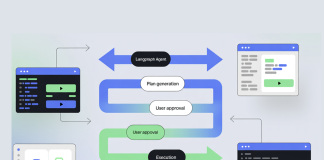
The advancement of AI technologies has led to the rise of human-in-the-loop (HITL) systems, which require user approval for actions taken by AI agents. Tools like LangGraph and Streamlit empower developers to create these interactive AI interfaces, enhancing user engagement and trust.
According to MarkTechPost, “LangGraph and Streamlit can be used to build AI agents that require user approval,” allowing for better supervision of AI behavior.
Significance of User Approval
Validating actions performed by AI agents through explicit user interaction is crucial. This HITL method ensures that users remain in control, which is essential for the credibility of AI systems. The explicit user approval in AI interactions ensures that actions taken are validated by users and align with their expectations, lifting the veil on AI operations.
Key Details and Context
More Details from the Release
Gemini 3 Deep Think’s advancements in reasoning can be leveraged in building more efficient AI agents.
Integrating AI capabilities with tools like Kimi Claw provides a broader range of functionalities for AI agents.
Using Streamlit allows for rapid prototyping of AI agent applications with user interface elements that can handle approvals.
Developing AI agents with human-in-the-loop mechanisms can improve the quality of decision-making.
The explicit user approval in AI interactions ensures that actions taken by AI agents are validated by users.
WebMCP facilitates direct communication between websites and AI agents, enhancing user interactivity and approval processes.
Kimi Claw environment offers a space for developers to design AI agents with a focus on explicit skills.
LangGraph and Streamlit can be used to build AI agents that require user approval.

Related image — Source: marktechpost.com — Original
The Role of Kimi Claw
Kimi Claw serves as a development environment focusing on specialized skills for AI agents. It allows developers to harness over “5,000 community skills and 40GB of cloud storage,” streamlining the design process. This integration opens opportunities for developers to enhance the capabilities of their AI applications.
WebMCP’s Functionality
Another innovative tool, WebMCP, enables direct communication between users and AI agents. This structured interaction increases the approval process’s efficiency and enhances interactivity. By facilitating this direct link, WebMCP clearly marks the evolution of conventional interaction methods and responsibilities between AI and users.
What Happens Next
Related image — Source: marktechpost.com — Original
Integrating Advanced AI Models
With advancements in AI reasoning, especially from tools like Google’s Gemini 3 Deep Think, the efficiency and decision-making capabilities of human-in-the-loop systems are set to improve. Gemini 3 has demonstrated exceptional performance, hitting 84.6% on ARC-AGI-2, highlighting the potential of integrating advanced AI models with HITL frameworks.
Future Development Trends
A focus on rapid prototyping using Streamlit is expected, enabling even quicker iterations in creating user-friendly interfaces for AI systems. This simplification in UI development empowers users to be involved without extensive technical knowledge and promotes wider adoption of AI technologies.
Why This Matters
Adopting human-in-the-loop AI agents allows businesses to attain higher reliability and user satisfaction. The mechanisms ensure improved decision-making quality and foster trust in AI applications. As models evolve with deeper reasoning capabilities, their ability to operate in collaboration with human oversight is expected to solidify their importance in various sectors.
User-Centric AI Development
The shift towards user-centric AI is profound. As AI agents increasingly incorporate human feedback mechanisms, developers must prioritize transparency and communication. This ensures that AI remains a tool guiding human decisions rather than replacing them.
FAQ
What is a human-in-the-loop AI agent?
A human-in-the-loop AI agent involves users in validation processes to approve actions taken by the AI.
How does LangGraph contribute to AI development?
LangGraph provides tools to build AI agents that require user input and approval, enhancing decision-making.
What is the role of WebMCP in AI interactions?
WebMCP enables AI agents to interact directly with website elements for improved user approval and engagement.
Can Kimi Claw enhance AI capabilities?
Yes, Kimi Claw offers a platform for integrating various skills, making AI agents more functional and adaptable.
Why is user approval important in AI agents?
User approval is crucial to ensure actions taken by AI agents align with user expectations and enhance trust in AI systems.
Sources
- Primary source
- Moonshot AI Launches Kimi Claw: Native OpenClaw on Kimi.com with 5,000 Community Skills and 40GB Cloud Storage Now
- Google AI Introduces the WebMCP to Enable Direct and Structured Website Interactions for New AI Agents
- Is This AGI? Google’s Gemini 3 Deep Think Shatters Humanity’s Last Exam And Hits 84.6% On ARC-AGI-2 Performance Today

