
Key Takeaways
- Humans significantly focus on lip movements during conversations, impacting robot design.
- Current humanoid robots often have unnatural mouth movements that can be unsettling.
- Columbia Engineering teams have developed a robot that learns lip movements by analyzing video input.
- Improving lip synchronization enhances emotional rapport in healthcare and entertainment settings.
- Realistic expressions help robots connect with humans on a deeper emotional level.
What We Know So Far
Robot faces are pivotal in maintaining effective human communication. Humans are naturally attuned to lip movements, paying significant attention during conversations. This focus critically affects how we interpret both speech and emotional cues. For robots aiming for seamless human interaction, achieving realistic lip synchronization is crucial to fostering authentic connections.

Not only does accurate synchronization impact the visual aspect of communication, but it also influences emotional bonding. Robots that can mirror human emotions through facial expressions can reassure and comfort individuals, particularly in sensitive situations such as healthcare or social assistance.
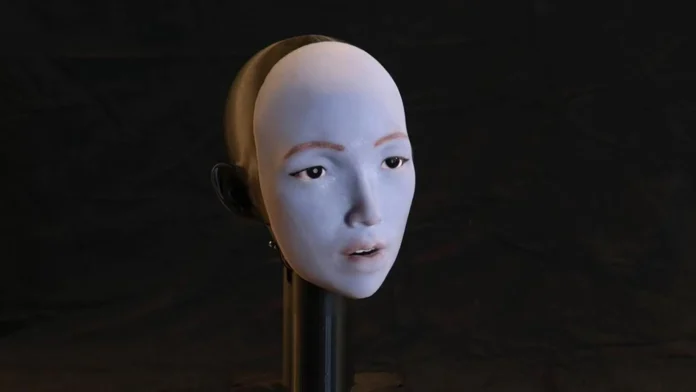
Researchers at Columbia Engineering have taken on the challenge of refining humanoid robots, addressing the often unsettling puppet-like mouth movements that current models display. Their work aims to create robots that appear more “alive” by improving how they move their lips and express emotion. Through advanced algorithms and machine learning techniques, these researchers are bridging the gap between robotic and human expressions.
Key Details and Context
More Details from the Release
Robots that can express nuanced facial gestures may foster deeper emotional connections with humans. This is significant as such capabilities enable the robots to communicate more effectively in various human-centric domains.

“The more it interacts with humans, the better it is expected to get,”
Facial expressions are crucial for robots to better interact in areas like healthcare and entertainment.
The robot’s ability to sync lip movements with audio input improves as it observes more human interactions. With technology continuously evolving, these improvements in lip synchronization are likely to enhance robots’ capabilities even further.
Creating realistic lip movements in robots is challenging due to hardware limitations and the complexity of speech. Nonetheless, researchers remain optimistic about overcoming these barriers.
The robot learns facial control by observing itself and human videos, allowing it to improve its lip synchronization. This innovative method of learning not only enhances its communication skills but also enriches interaction quality with users.
Researchers from Columbia Engineering have developed a robot capable of learning lip movements for speech and singing. The team’s dedication to this project exemplifies the commitment to enhancing robot designs that respect and reflect human communication styles.
Current humanoid robots often exhibit unnatural, puppet-like mouth movements. Addressing this issue is pertinent for the robots’ acceptance in everyday human environments.
Humans pay significant attention to lip movement during face-to-face conversations, a fact that underscores the need for robots to have more human-like interactions.
The team has developed a robot capable of learning lip movements for both speech and singing by observing itself and analyzing human videos. This observational learning process optimizes the robot’s ability to synchronize its lip movements with audio input, significantly enhancing emotional connections.
According to Hod Lipson, a prominent researcher in the field, “The more it interacts with humans, the better it is expected to get.” This iterative learning approach highlights the importance of ongoing human-robot interactions in developing lifelike communication.
Challenges in Lip Synchronization
Creating realistic lip movements in robots comes with its set of challenges. Issues arise such as hardware limitations and the intricate nature of human speech, particularly with complex sounds. The Columbia Engineering team acknowledges these hurdles but believes that performance is expected to improve over time and with practice.
Yuhang Hu mentions that the robot’s learning process, “When the lip sync ability is combined with conversational AI such as ChatGPT or Gemini, the effect adds a whole new depth to the connection the robot forms with the human.” This integration marks a significant advancement in human-robot interaction.
What Happens Next
As humanoid robots become more advanced in their ability to express a range of emotions, the potential applications in sectors like healthcare, education, and entertainment grow. Robots equipped with nuanced facial expressions may build stronger connections with humans, potentially enhancing roles in caregiving or companionship.
The more these robots watch humans communicating, the more adept they are expected to become at imitating the nuanced facial gestures necessary for emotional resonance. With ongoing improvements in technology and training, the future of humanoid robots looks promising, suggesting a shift in how we integrate them into our lives.
Why This Matters
Realistic facial expressions in robots are not simply about aesthetics; they have profound implications for how these machines interact with humans. Building deeper emotional connections through effective communication can transform how we integrate robots into our daily lives.
“We had particular difficulties with hard sounds like ‘B’ and with sounds involving lip puckering, such as ‘W’. But these abilities is expected to likely improve with time and practice,”
In fields like healthcare, having robots that can convey genuine emotions could improve patient interactions and outcomes. As Yuhang Hu states, “The longer the context window of the conversation, the more context-sensitive these gestures are expected to become.” This nuanced understanding could reshape interactions between humans and machines.
FAQ
Why do humans pay attention to lip movements?
Humans pay attention to lip movements to enhance understanding during face-to-face conversations.
What is the main challenge in creating realistic lip movements in robots?
The main challenge is hardware limitations and the complexity of accurately mimicking human speech.

