

Key Takeaways
- The Amazon Catalog Team developed a self-learning AI system to improve product accuracy and reduce costs using Amazon Bedrock.
- Disagreements among smaller models help identify complexities, guiding the use of larger models to resolve issues.
- Feedback from sellers and customers enhances attribute extraction accuracy, contributing to system improvements.
- The AI architecture fosters continuous learning by capturing insights from model disagreements and user feedback.
- Amazon Bedrock serves as the foundational infrastructure supporting efficient multi-model AI systems.
What We Know So Far
Introduction to Self-Learning Generative AI
The Amazon Catalog Team has successfully built a self-learning generative AI system utilizing the capabilities of Amazon Bedrock. This innovative approach allows the system to continuously enhance its accuracy while simultaneously decreasing operational costs. Utilizing cutting-edge algorithms, the AI learns from data interactions, improving over time. As business conditions evolve, the adaptive aspect of this AI is vital for maintaining relevance in product listings.
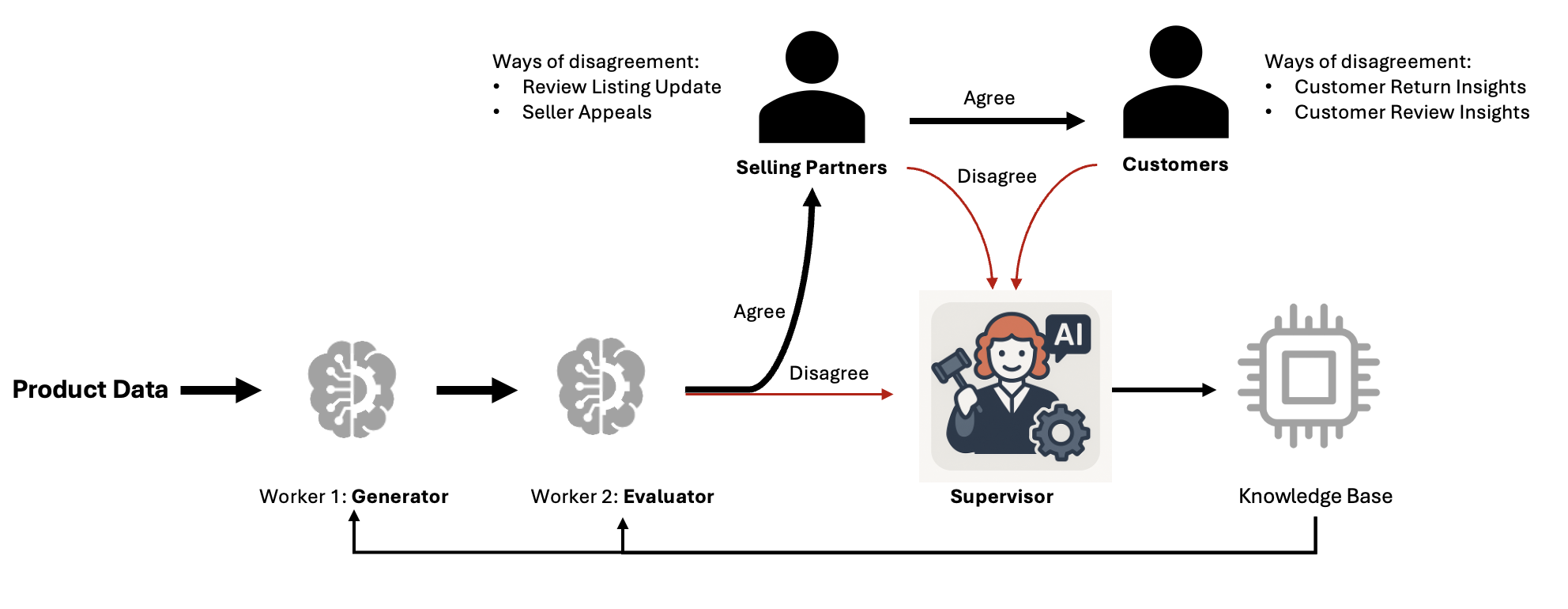
By leveraging Amazon Bedrock’s infrastructure, the team handles vast amounts of product data, ensuring optimal performance in varying conditions. This foundational layer supports a multi-model architecture, which is crucial for managing the complexities associated with product categorization. The synergy of these components ensures responsiveness to market dynamics, fostering a competitive edge for Amazon.
Complexity Management
To navigate the challenges presented by large datasets, smaller models assess the same product category. If discrepancies arise among these models, larger, more complex models are deployed to reach consensus. This results-driven approach is a hallmark of Amazon’s self-learning capability. The integration of diverse model outputs provides a comprehensive view, aiding in clearer decision-making.
Interestingly, these model disagreements are not strictly viewed as errors; rather, they pinpoint areas of complexity that need examination, reinforcing the system’s iterative learning architecture. By refining this process, Amazon can address nuances in data and ensure comprehensive coverage of product characteristics.
Key Details and Context
More Details from the Release
Amazon Bedrock provides the essential infrastructure for multi-model architectures, optimizing both cost and performance. Its robust design allows it to support numerous models concurrently, each contributing unique insights. The architecture allows for continuous improvement through a feedback loop from disagreements and seller/customer feedback.
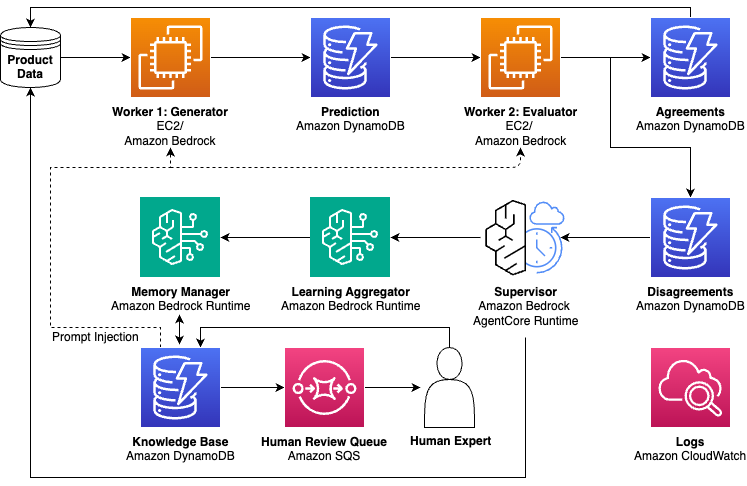
Error rates fell continuously not through retraining but through accumulated learnings from resolved disagreements injected into smaller model prompts. This method showcases the effectiveness of leveraging historical interactions to refine model performance over time. The supervisor agent integrates with Amazon’s extensive Selection and Catalog Systems to manage disagreements.
The self-learning system captures feedback signals from sellers and customers to improve attribute extraction accuracy. A nuanced approach helps accommodate varying product types and listings efficiently, further enhancing the system’s effectiveness. Disagreements among models indicate complexity and are not always indicative of errors, leading to the design of a self-learning system.
To manage complexity, multiple smaller models are deployed to process the same products, and only larger models are invoked when there are disagreements. This strategic deployment fosters resource optimization, reducing operational overheads.
The Amazon Catalog Team built a self-learning generative AI system that continuously improves accuracy while reducing costs at scale using Amazon Bedrock. Through seamless integration of diverse models and feedback, this initiative exemplifies innovative thinking in AI deployment.
Feedback Loops and Learning Cycles
The system incorporates crucial feedback from both sellers and customers. This data is pivotal for advancing attribute extraction accuracy, which plays a significant role in how products are listed and categorized on the platform. The iterative nature of these feedback loops ensures the system is always optimizing.
Error rates have shown continuous improvement not through conventional retraining methods, but by optimizing the existing model inputs based on resolved disagreements. This strategy effectively enhances performance while keeping operational costs in check. Such refinements are crucial for sustaining high accuracy in an ever-evolving e-commerce environment.
Approval Processes and System Integration
A dedicated supervisor agent has been created to work in harmony with Amazon’s extensive Selection and Catalog Systems, overseeing model disagreements and ensuring that resolutions enhance the overall cataloging accuracy. This structured approach not only reduces the burden on individual model performance but also cultivates an ecosystem of collaborative learning, further enriching the catalog’s data integrity.
The careful balance of oversight and autonomy facilitates an agile response to changes in product data, positioning Amazon to meet the demands of a dynamic marketplace.
What Happens Next
The Future of AI at Amazon
The success of this AI initiative signals a broader trend in Amazon’s approach to artificial intelligence. By adopting cutting-edge technologies like Amazon Bedrock, the company is poised to set a new standard in AI-driven efficiency. The scaling capabilities inherent in this system suggest exciting possibilities for future applications.
Advancements in this area are expected to likely lead to faster product updates, enhanced user experiences, and improved seller satisfaction as more accurate listings provide clearer expectations for buyers. The trajectory of AI at Amazon indicates a commitment to continuous improvement and innovation.
Scaling and Expansion Possibilities
As the capabilities of this self-learning generative AI system scale, Amazon could explore additional implementations across various divisions, enhancing operations beyond product cataloging. There may also be potential for adopting similar architectures in unrelated sectors, ushering in a new era of multi-modal AI excellence. By embracing diverse applications, Amazon can maximize the impact of its AI capabilities.
Why This Matters
Implications for the Market
The implications of these advancements extend beyond Amazon’s ecosystem. As competitors look to emulate similar models, the landscape of e-commerce and AI-driven solutions is expected to evolve significantly. The strategic insights gained from this self-learning AI system could revolutionize industry standards for operational efficiencies.
Ultimately, such innovations promote fair competition, as enhanced efficiencies may lead to better pricing, greater selection, and improved service standards across online marketplaces. The emphasis on collaboration within AI deployment underscores a commitment to shared growth.
Broader AI Capabilities
This self-learning system exemplifies how AI can be tailored to meet specific business needs while simultaneously pushing the technological envelope. It represents a milestone in developing advanced AI capabilities that can adapt to dynamic market challenges, ensuring resilience and competitive advantage in the long run.
“The AI architecture fosters continuous learning by capturing insights from model disagreements and user feedback.”
FAQ
What is self-learning generative AI?
It is a type of AI that continuously improves its performance through learning from feedback and data.
How does Amazon Bedrock support AI models?
It provides the necessary infrastructure for multi-model architectures, optimizing performance and cost.
Why are disagreements among models beneficial?
They indicate complexity and help improve the overall accuracy by directing attention to areas needing resolution.
How does the AI system reduce operational costs?
Through continuous learning from resolved disagreements, rather than retraining, leading to greater efficiency.

