

Decentralized SLAM — Key Takeaways
- Decentralized collaborative SLAM is crucial for enabling effective multi-robot missions.
- Experiments demonstrated the utility of three robots in a Mars-like terrain for localization tasks.
- Intermittent communication challenges significantly impact the performance of C-SLAM.
- A novel dataset provides insights on peer-to-peer communication between robots, vital for future research.
- The study offers valuable lessons for deploying robots in complex planetary terrains and their operational challenges.
What We Know So Far
Understanding C-SLAM
Decentralized SLAM — Decentralized collaborative simultaneous localization and mapping (C-SLAM) is essential for enabling multi-robot missions. This technology allows robots to operate without relying on a central control, which is particularly beneficial in Mars analogue terrains.
Decentralized SLAM technologies employ sophisticated algorithms to ensure that multiple robots can navigate and map complex environments while retaining independence in their operations.
Recent experiments showcased three robots working collaboratively to tackle complex navigation and mapping tasks, shedding light on their operational capabilities and the importance of effective communication. The collaborative nature of C-SLAM allows robots to exchange information, enhancing their ability to understand their surroundings and adjust to dynamic conditions.
Challenges in Communication
The performance of C-SLAM is significantly affected by limited and intermittent communication. Communication constraints can delay data sharing among robots, which in turn impacts their localization accuracy and operational efficiency.
As the study suggests, understanding and overcoming these communication barriers is crucial for the success of multi-robot missions in planetary environments. Effective communication protocols and strategies are essential for minimizing the impact of these challenges on mission objectives.
Key Details and Context
More Details from the Release
C-SLAM technology is anticipated to play a key role in exploring the Moon, Mars, and other planets.
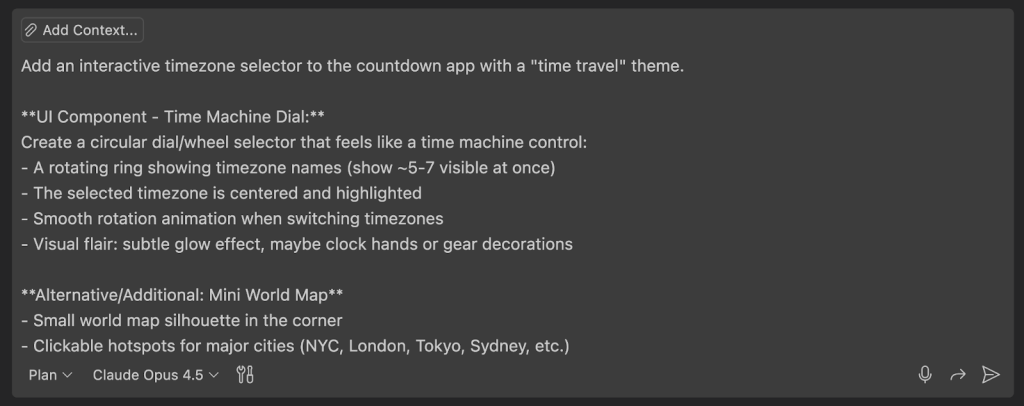
“Add a query parameter so I can specify how many minutes away we are from midnight as an override for manual testing.”
The research outlines lessons learned from the operation of multiple robots in challenging terrains. It emphasizes the need for robust communication methods that can withstand the disturbances of harsh planetary environments.
The developed dataset aims to support future research on decentralized multi-robot operations constrained by communication. This dataset not only provides insights but also serves as a foundational tool for ongoing research efforts.
A novel dataset was introduced that includes real-time peer-to-peer inter-robot throughput and latency measurements.
The unique challenges of localization in planetary-like environments were examined during the experiments. These environments are representative of the actual challenges faced when exploring celestial bodies.
Insights from Experiments
The experiments highlighted unique challenges associated with localization in planetary-like environments. These environments mimic the conditions found on celestial bodies such as Mars, making them ideal testing grounds for robotic technologies.
A novel dataset was introduced that includes real-time peer-to-peer inter-robot throughput and latency measurements, providing invaluable information for future research on decentralized multi-robot operations constrained by communication. The insights from these measurements are expected to inform future technological advancements.
Lessons Learned
The lessons learned from operating multiple robots in challenging terrains underpin the importance of collaborative SLAM technologies. These insights are pivotal for developing strategies to enhance autonomous robot navigation on other planets, like the Moon and Mars. Lessons include understanding environmental factors and adjusting navigation algorithms accordingly.
With C-SLAM anticipated to play a key role in exploring these planetary bodies, the findings from the experiments set the stage for the next wave of robotic exploration. Future missions could benefit from improved communication frameworks that are tested in various environments.
What Happens Next
Future Research Directions
The newly developed dataset aims to support future research on decentralized multi-robot operations constrained by communication. This advancement is expected to ensure robots are better equipped for real-world interplanetary exploration missions. Enhancements in data sharing efficiency are paramount for future success.
Researchers are now poised to enhance robot collaboration techniques, striving for greater operational autonomy and reliability in challenging environments. Advancements in C-SLAM frameworks may lead to new methodologies for multi-robot coordination.
Potential Missions
As C-SLAM technology continues to evolve, its implementation in future missions is expected to be essential for navigating the terrains of celestial bodies. The insights gained from the Mars analogue experiments is expected to guide the development of robust robotic systems, potentially paving the way for future human and robotic exploration.
Overall, leveraging C-SLAM within collaborative frameworks could lead to groundbreaking advancements in planetary exploration. The ongoing development and application of these technologies can significantly affect our understanding and utilization of extraterrestrial environments.
Why This Matters
Enabling Interplanetary Exploration
The findings of this study underscore the importance of decentralized SLAM technology in enabling effective multi-robot missions on other planets. By improving localization and mapping strategies, researchers expect to enhance robots’ abilities to operate autonomously in foreign environments. Each advancement contributes to the larger goal of interplanetary exploration.
As we push the boundaries of space exploration, understanding the collaborative capabilities of our robotic systems becomes a cornerstone of success. The integration of advanced SLAM techniques with inter-robot communication is expected to be crucial in overcoming the challenges posed by uncharted planetary terrains.
FAQ
What to Know About Decentralized SLAM
Understanding how decentralized frameworks operate is essential for the advancement of multi-robot missions in complex terrains. The ongoing research and development is expected to enhance navigational precision and inter-robot communication. These enhancements are vital for future missions beyond Earth, as innovation in this area could lead to greater exploration capabilities.

