
Key Takeaways
- GPT-5.3-Codex operates 25% faster than its predecessor, enhancing coding efficiency.
- It integrates professional reasoning and knowledge, allowing for better decision-making.
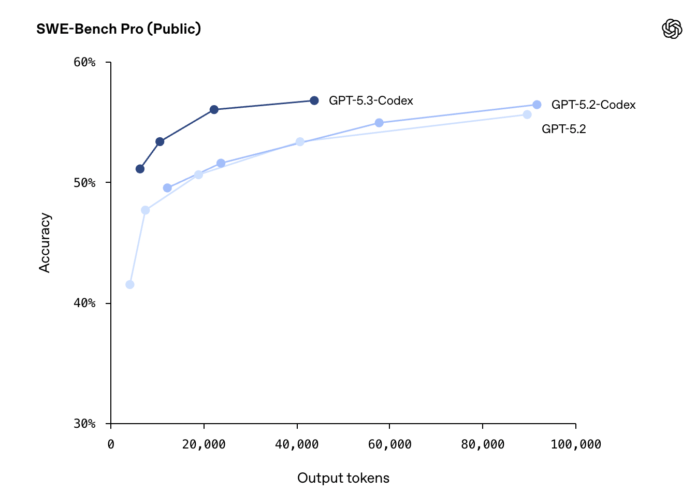
- Benchmark tests like SWE-Bench Pro show its capabilities, achieving 56.8% with high reasoning effort.
- The new model requires fewer tokens to generate results, promoting cost efficiency.
- Designed to assist throughout the software lifecycle, it offers features like real-time explanation of actions.
What We Know So Far
Introduction to GPT-5.3-Codex
OpenAI has just announced GPT-5.3-Codex, an advanced coding model aimed at transforming how software developers approach coding tasks. This model is said to run 25% faster than its predecessor, GPT-5.2-Codex, indicating a significant improvement in performance.
Beyond speed, GPT-5.3-Codex merges coding capabilities with reasoning and professional knowledge, addressing a critical need in software development. With the ability to assist in testing, deployment, and debugging, this model promises to streamline various production tasks.
Benchmarks and Evaluations
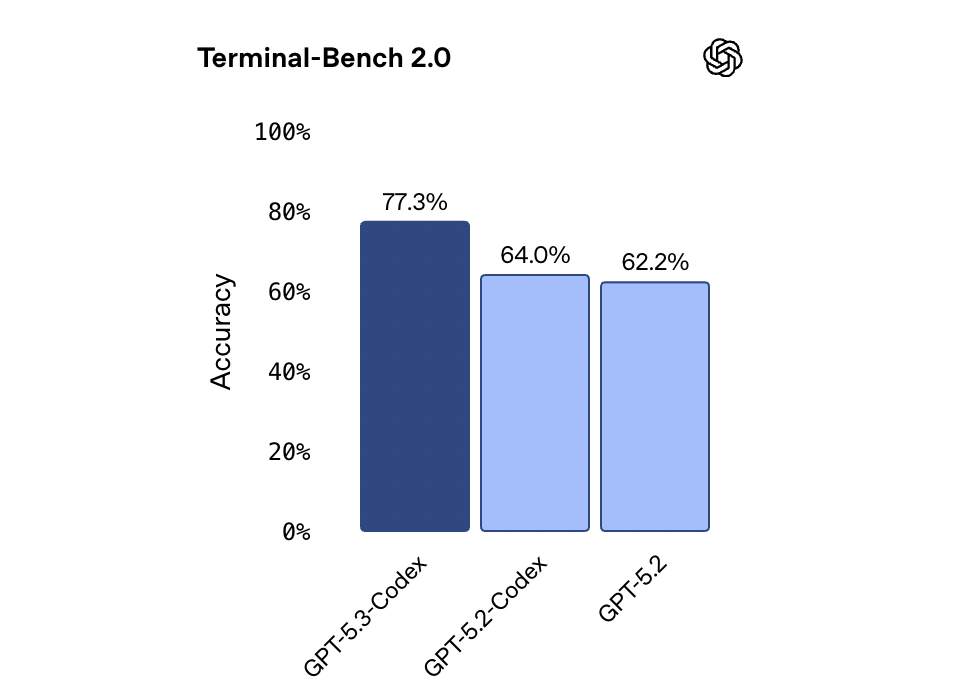
The modeling system has been rigorously evaluated on established benchmarks including SWE-Bench Pro and Terminal-Bench 2.0. In a notable performance metric, GPT-5.3-Codex scored 56.8% on SWE-Bench Pro while demonstrating a high reasoning effort—a testament to its enhanced capabilities.
Additionally, the model is designed to require fewer tokens for generating results compared to its predecessors, which could lead to significant cost savings for developers.
Key Details and Context
More Details from the Release
OpenAI classifies GPT-5.3-Codex as ‘High capability’ for cybersecurity tasks.
GPT-5.3-Codex explains its actions and responds to user feedback in real-time.
The model is designed to assist across the software lifecycle including debugging and deployment.
GPT-5.3-Codex required fewer tokens to achieve its results compared to previous models.
On the SWE-Bench Pro, GPT-5.3-Codex achieves a score of 56.8% with high reasoning effort.
GPT-5.3-Codex’s performance is evaluated on benchmarks such as SWE-Bench Pro and Terminal-Bench 2.0.
The model combines the capabilities of GPT-5.2-Codex with reasoning and professional knowledge.
GPT-5.3-Codex is a new agentic coding model from OpenAI that runs 25% faster than its predecessor.
OpenAI classifies GPT-5.3-Codex as ‘High capability’ for cybersecurity tasks.
GPT-5.3-Codex explains its actions and responds to user feedback in real-time.
The model is designed to assist across the software lifecycle including debugging and deployment.
GPT-5.3-Codex required fewer tokens to achieve its results compared to previous models.
On the SWE-Bench Pro, GPT-5.3-Codex achieves a score of 56.8% with high reasoning effort.
GPT-5.3-Codex’s performance is evaluated on benchmarks such as SWE-Bench Pro and Terminal-Bench 2.0.
The model combines the capabilities of GPT-5.2-Codex with reasoning and professional knowledge.
GPT-5.3-Codex is a new agentic coding model from OpenAI that runs 25% faster than its predecessor.
Technical Enhancements
GPT-5.3-Codex not only boosts speed but also incorporates advanced reasoning abilities, seamlessly blending coding performance with professional insights. This is crucial as cybersecurity increasingly relies on clock-speed and intelligence in tackling complex problems.
Related image — Source: marktechpost.com — Original
OpenAI categorizes GPT-5.3-Codex as ‘High capability’ for cybersecurity tasks, reflecting its potential in addressing security vulnerabilities and improving defensive mechanisms.
Market Implications
The introduction of GPT-5.3-Codex is expected to have wide-reaching impacts across the software development landscape. Organizations looking to enhance productivity may find this model invaluable for accelerating workflows and increasing the efficiency of development teams.
Its deployment could set a new standard in AI-assisted coding, influenced by both its operational speed and ability to interpret developer intents and actions in real-time.
What Happens Next
Release and Adoption
As OpenAI rolls out GPT-5.3-Codex, the focus is expected to likely shift to understanding its adoption rates among software developers. Immediate feedback from users is expected to be crucial to evaluate its true efficiency compared to existing tools.
Related image — Source: marktechpost.com — Original
Anticipation is expected to build around whether companies is expected to integrate this coding model into their everyday development processes, particularly in critical sectors where performance is paramount.
Future Developments
Looking ahead, enhancements may follow as OpenAI continues to refine the model based on user feedback and emerging industry needs. The evolution of AI coding tools is expected to significantly shape both cybersecurity measures and general software development strategies.
There is potential for further expansions to address specific programming languages and scenarios, diversifying the capabilities of GPT-5.3-Codex.
Why This Matters
Impact on Software Development
The launch of GPT-5.3-Codex signifies a landmark leap in AI tools designed for coding. By offering faster performance and sophisticated reasoning, OpenAI is setting the stage for more innovative software solutions.
As such technologies advance, they can significantly reduce the burden on software developers, allowing them to focus on creative and complex aspects of software design rather than repetitive coding tasks.
Bridging Gaps in Cybersecurity
Given the heightened importance of cybersecurity, the effective application of AI models like GPT-5.3-Codex could revolutionize the field. With its classified capabilities, it has the potential to identify vulnerabilities and automate tasks that are often time-consuming and error-prone.
This represents a forward-thinking approach in a rapidly evolving digital landscape where cybersecurity measures are more critical than ever before.
FAQ
Frequently Asked Questions
Here are answers to some common questions about GPT-5.3-Codex.
Sources
- Primary source
- OpenAI Just Launched GPT-5.3-Codex: A Faster Agentic Coding Model Unifying Frontier Code Performance And Professional Reasoning Into One System
- How to Build Production-Grade Data Validation Pipelines Using Pandera, Typed Schemas, and Composable DataFrame Contracts
- Anthropic Releases Claude Opus 4.6 With 1M Context, Agentic Coding, Adaptive Reasoning Controls, and Expanded Safety Tooling Capabilities
- Mistral AI Launches Voxtral Transcribe 2: Pairing Batch Diarization And Open Realtime ASR For Multilingual Production Workloads At Scale

