

Key Takeaways
- The new chip is nearly 100 times thinner than a human hair, improving efficiency.
- Utilizes scalable manufacturing similar to microchip production, enabling mass production.
- Employs an optical phase modulator to manipulate laser light, crucial for qubit control.
- Reduces microwave power consumption by approximately 80%, leading to less heat generation.
- Facilitates the development of integrated photonic circuits for future quantum applications.
What We Know So Far
Introducing a Game-Changing Technology
A groundbreaking innovation in quantum computing has been made with the development of a tiny chip that is almost 100 times thinner than a human hair. This astonishing miniaturization promises to enhance the efficiency and scalability of quantum computing systems.
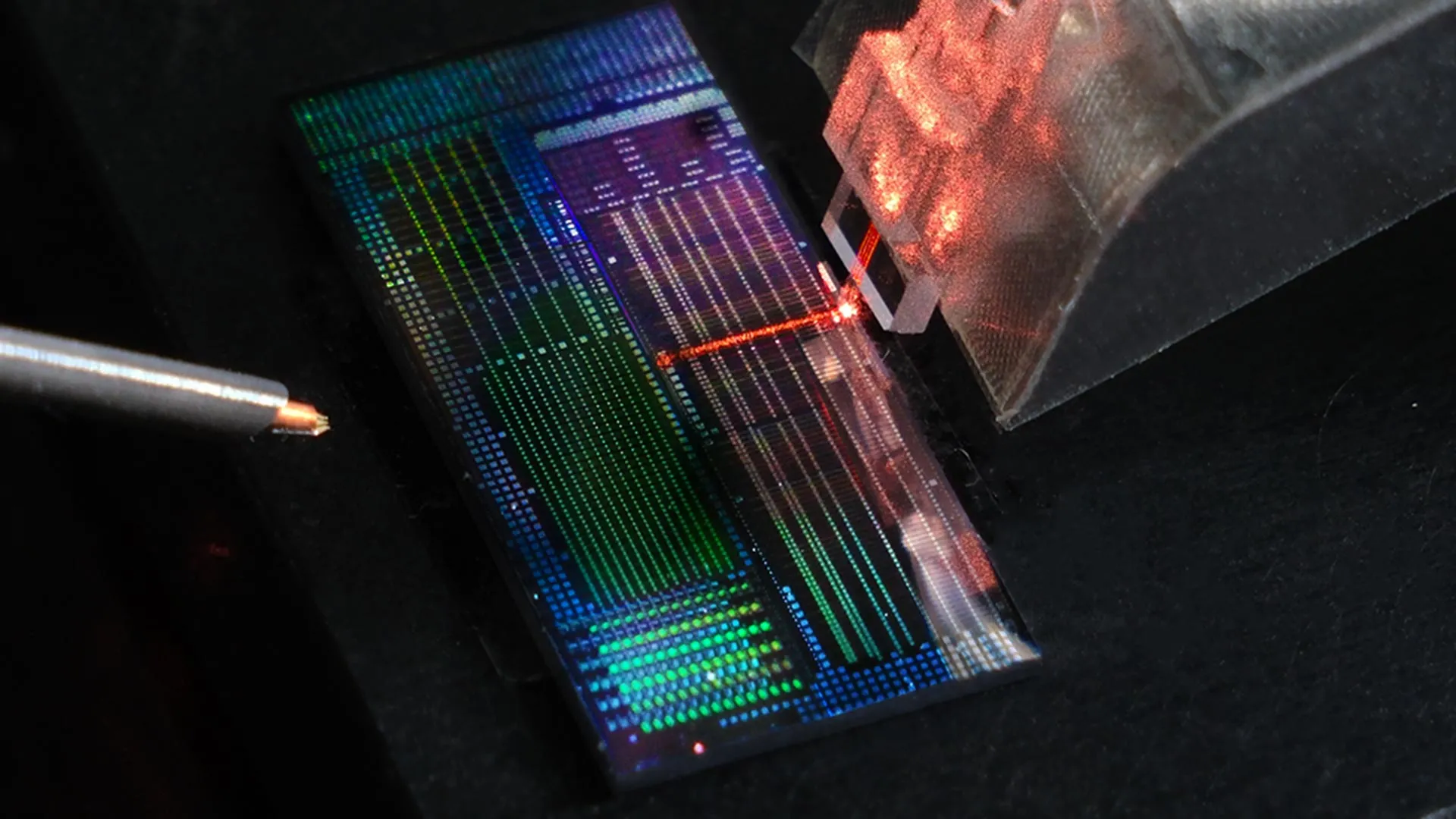
Utilizing scalable manufacturing methods akin to those used in microchip production, this new device stands as a practical solution in a field that demands rapid advancements.
The Role of Optical Phase Modulators
The optical phase modulator incorporated in this chip is pivotal for the precise manipulation of laser light, necessary for effective control of qubits— the building blocks of quantum computing.
As stated by researchers, “Creating new copies of a laser with very exact differences in frequency is one of the most important tools for working with atom- and ion-based quantum computers” (source: Science Daily).
Key Details and Context
More Details from the Release
The researchers are working towards fully integrated photonic circuits for quantum computing.
The manufacturing of this device allows for mass production of a key component needed for future quantum computers.
Lower power consumption means less heat and allows more channels to be packed closely together on a single chip.
The device operates using about 80 times less microwave power than existing commercial modulators.
The optical phase modulator can manipulate laser light precisely, necessary for controlling qubits in quantum computing.
The new device uses scalable manufacturing methods similar to those used in microchip production.
Researchers developed a device that is almost 100 times thinner than a human hair.
More Details from the Release
This device is seen as a crucial step toward a truly scalable quantum photonic platform capable of controlling many qubits.
The researchers are working towards fully integrated photonic circuits for quantum computing.
The manufacturing of this device allows for mass production of a key component needed for future quantum computers.
Lower power consumption means less heat and allows more channels to be packed closely together on a single chip.
The device operates using about 80 times less microwave power than existing commercial modulators.
The optical phase modulator can manipulate laser light precisely, necessary for controlling qubits in quantum computing.
The new device uses scalable manufacturing methods similar to those used in microchip production.
Researchers developed a device that is almost 100 times thinner than a human hair.
Significant Reductions in Power Consumption
This advanced device operates using about 80 times less microwave power than conventional modulators. This drastic reduction minimizes heat output, allowing for denser packing of components on a single chip.

“Creating new copies of a laser with very exact differences in frequency is one of the most important tools for working with atom- and ion-based quantum computers,”
Lower power consumption not only enhances the chip’s efficiency but also supports the practical integration of multiple channels—a vital factor in the future of quantum technology.
Manufacturing Processes and Scalability
The manufacturing process employed for this device is designed to enable mass production, thus addressing one of the significant hurdles in quantum computing: the supply of necessary components. As noted by experts, “CMOS fabrication is the most scalable technology humans have ever invented” (source: Science Daily).
This chip could be a crucial piece for realizing fully integrated photonic circuits capable of controlling multiple qubits simultaneously.
What Happens Next
Moving Toward Integrated Photonic Circuits
The researchers are committed to advancing toward fully integrated photonic circuits for quantum computing, a stage that could profoundly impact the scalability and efficiency of quantum processors.
By optimizing this technology, they hope to future-proof quantum systems that can accommodate substantial scaling facets, ultimately leading to more robust quantum applications.
Future Prospects for Quantum Computing
The new device signifies an essential step forward in the quest for a truly scalable quantum photonic platform. “This device is one of the final pieces of the puzzle,” emphasizes one of the leading researchers (source: Science Daily).
As these technologies continue to evolve, their integration into future quantum computing systems may pave the way for breakthroughs that we have yet to imagine.
Why This Matters
A Revolution in Quantum Technology
The advancements made with this tiny chip are not merely incremental but represent a transformative potential that could reshape the entire landscape of quantum computing. Enhanced qubit control and effective scaling could accelerate the practical deployment of quantum computers.
“But to do that at scale, you need technology that can efficiently generate those new frequencies.”
Moreover, as industries begin to realize the applications of quantum technology, this innovation could facilitate an array of new capabilities across finance, logistics, and cryptography.
Conclusion: The Quantum Future Beckons
The ongoing evolution of quantum computing hinges on developments like these. As we stand at the brink of a new technological era, the innovations encapsulated in this tiny chip present a beacon of hope for engineers and researchers dedicated to overcoming existing limitations in quantum systems.
FAQ
What is the significance of the new tiny chip in quantum computing?
It allows for better control of qubits and reduces power consumption, paving the way for scalable quantum systems.

