

most misunderstood graph in AI — Key Takeaways
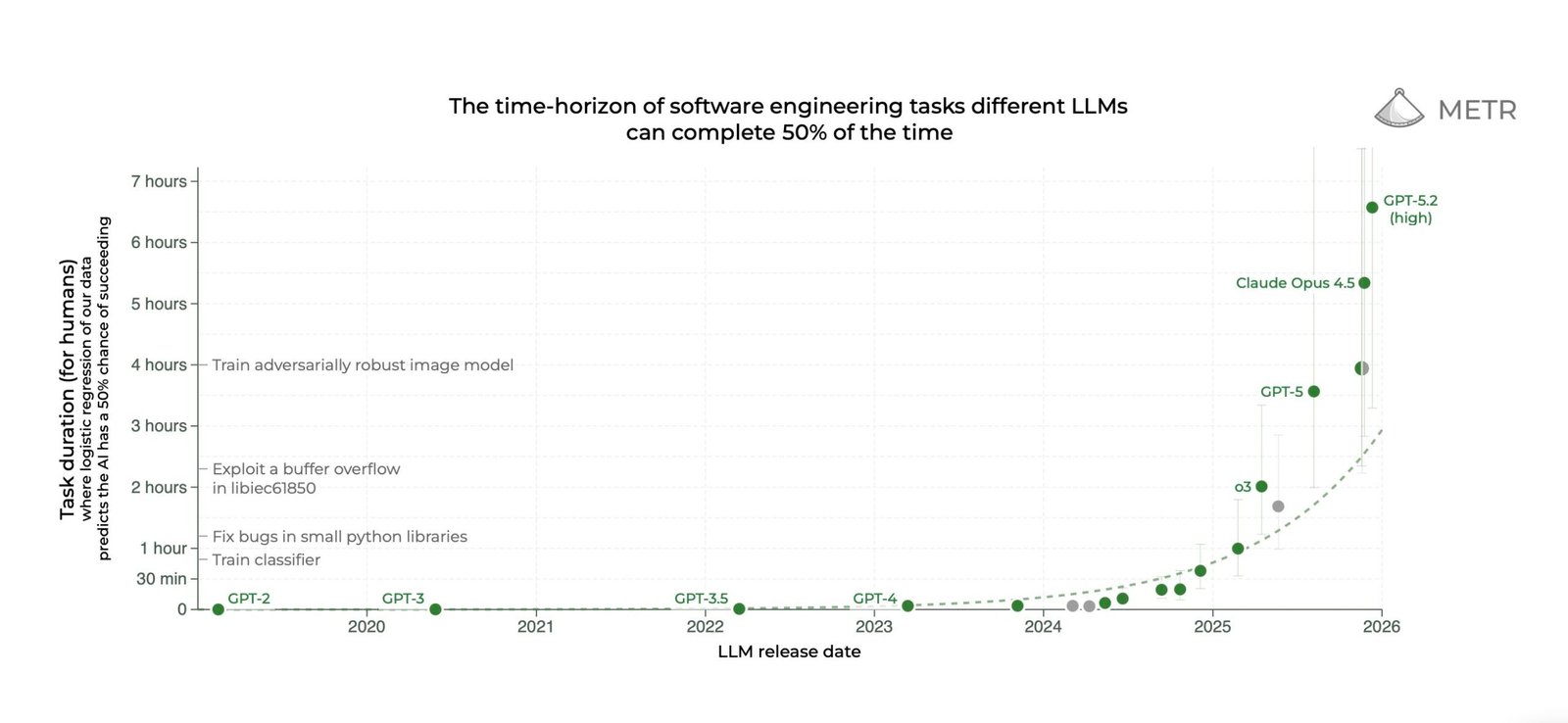
- The METR plot reveals the time taken for humans to complete tasks that AI models can handle.
- Misinterpretation of the METR plot suggests that it indicates independent AI operation time.
- Advances in AI capabilities are reflected in the increasing time horizons of top-tier models.
- Expert evaluations challenge the notion that task difficulty correlates with time taken.
- Real-world complexities are often not reflected in standard task evaluations of model performance.
What We Know So Far
The Basics of the METR Plot
The METR (Model Efficiency Task Response) plot is a visual representation that signifies how long it takes for humans to complete specific tasks that AI models can successfully execute. This graph has become a point of contention in discussions about AI capabilities. Misunderstandings stem from its nuanced data presentation.

Related image — Source: technologyreview.com — Original
Many observers misinterpret this data representation to mean that the figures highlight how long AI can perform tasks independently, which is a significant misunderstanding. This confusion can lead to unrealistic expectations regarding AI’s operational capabilities in real-world scenarios.
Simply put, while the METR plot provides valuable insights, it must be understood in the right context to avoid misjudgment about AI’s abilities.
Key Details and Context
More Details from the Release
The METR plot is frequently shared without the necessary context to understand its implications fully. Without background, viewers might draw erroneous conclusions about AI’s performance relative to human effort.
Related image — Source: technologyreview.com — Original
“I don’t think it’s necessarily a given fact that because something takes longer, it’s going to be a harder task,”
The METR plot was extensively cited in the viral sci-fi story AI 2027, linking it to predictions of superintelligent AI, further complicating the public’s understanding of technology.
Models do noticeably worse on tasks considered ‘messy’ compared to non-messy ones. This contrast indicates that task evaluation mechanisms should be more tailored to include various complexities seen in real-life situations.
Moreover, the task evaluations used to determine model performance do not reflect the complexities of real-world work. This highlights the challenges of accurately measuring AI efficiency and effectiveness across diverse tasks.
Critics have pointed out that the claim that the time taken for tasks correlates to their difficulty is often overly simplistic. Experts consistently challenge this outdated notion, paving the way for more refined models of AI evaluation.
The time horizons for top-tier AI models have been increasing over time, indicating that AI capabilities are advancing. This progression suggests that continuous assessment is necessary for understanding what these technologies can actually achieve.
Many people misinterpret the METR plot to mean that the figures indicate the length of time models can operate independently. Such misinterpretations can hamper responsible discussions about AI technologies.
Task Evaluation Versus AI Performance
Experts have highlighted that the time horizons for top-tier AI models have been on the rise, which suggests advancements in their capabilities. This correlation emphasizes the progressive enhancement of AI technologies and promotes the necessity for ongoing dialogue within the tech community.
However, the criteria employed to evaluate model performance often neglect the intricate nuances found in real-world tasks, leading to discrepancies between expectations and actual results. These evaluations do not adequately mirror the complexities faced when AI is put to actual use, ultimately affecting how AI is perceived among the general population.
Furthermore, discussions around the METR plot underscore the critical role of transparency in presenting data. As AI technologies continue to evolve, a fine-tuned approach to performance evaluation is expected to enable more effective communication between tech experts and the public.
Implications of Misinterpretation
The METR plot’s importance extends beyond mere numbers. As noted in discussions surrounding its implications, the portrayal that the time taken for tasks relates to difficulty can be misleading. As noted by expert Inioluwa Deborah Raji, “I don’t think it’s necessarily a given fact that because something takes longer, it’s going to be a harder task.”
This underscores the need for deeper analysis and accurate contextualization of AI performance metrics to foster a more informed public perspective on advanced technologies.
What Happens Next
Future Evaluations of AI
As AI continues its rapid evolution, the discussion around such graphs is expected to also transform. Awareness of the METR plot’s misinterpretations should spark better educational initiatives regarding AI functionalities.

Related image — Source: technologyreview.com — Original
Experts like Sonya Huang point out the long-term considerations in AI planning, underscoring the importance of realism in understanding AI’s operational timelines. “The provocation really was like, ‘What is expected to you do when your plans are measured in centuries?’” Lagging behind in the comprehension of AI metrics can impact future developments and expectations.
Why This Matters
A Call for Better Understanding
Grasping what the METR plot genuinely conveys is crucial for setting realistic expectations around AI. As researchers and industry professionals work towards more advanced models, the narrative around these advancements must evolve to align with the actual capabilities of AI.
“I can do all the theorizing I want about whether or not it makes sense, but the trend is there,”
The dissemination of misleading interpretations can distort public perception. Efforts should focus on enriching the dialogue surrounding AI capabilities and performance measures, ensuring that society comprehends the true nature of technological advancements and their context.
FAQ
Common Questions
Understanding the METR plot and its implications is not just for enthusiasts but also essential for informed discussions within the technology sector. Here are some common questions:

