

Daggr — Key Takeaways
- Daggr is a new Python library for streamlined AI workflow creation, focused on usability.
- It provides a visual canvas for inspecting intermediate outputs, enhancing debugging and analysis.
- Users can rerun specific workflow steps without re-executing the entire workflow, saving time.
- Integrates smoothly with Gradio Spaces, facilitating deployment of machine learning models.
- Daggr supports caching and saving the workflow’s state for efficient experimentation.
What We Know So Far
Daggr is an innovative open-source Python library tailored for constructing AI workflows effortlessly. This advancement allows developers to chain applications and visualize processes, making it a useful tool for researchers and practitioners alike. The stand-out characteristics of Daggr greatly enhance the scope of computational experimentation.
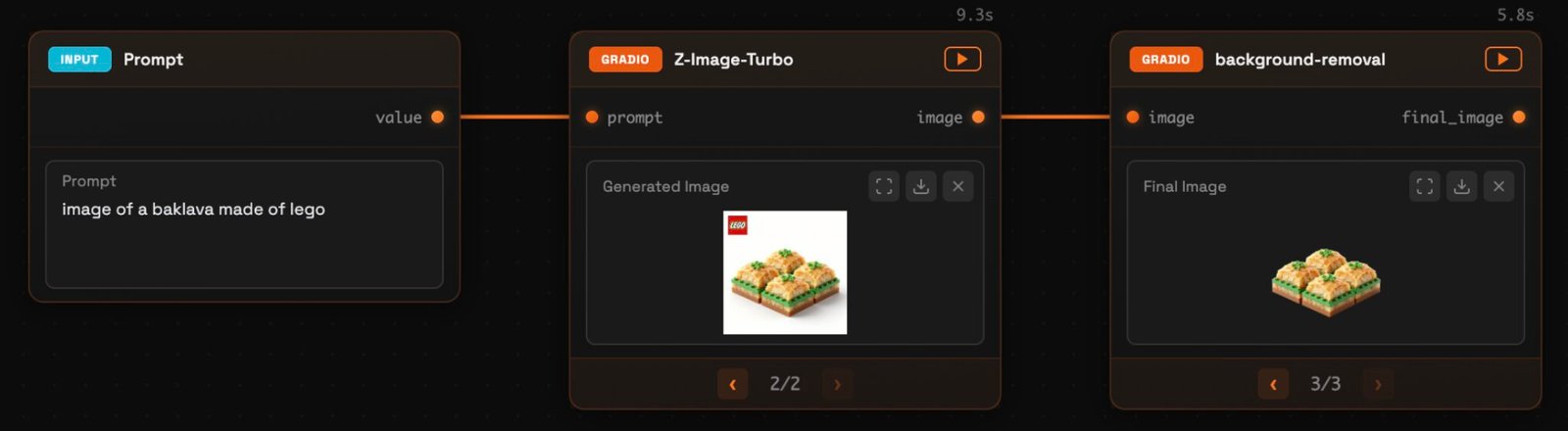
Implementing Daggr allows for intuitive construction and management of your workflows. It provides essential tools for insight-driven decision-making and workflow optimization, particularly useful in collaborative environments.
As technology in AI continues to advance, Daggr presents itself as a vital resource designed to meet the growing needs of developers. It embraces the complexity of modern machine learning tasks while providing a user-friendly interface.
One of Daggr’s standout features is its ability to automatically generate a visual canvas, enabling users to inspect intermediate outputs in real-time. This capability enhances the debugging process and provides deeper insights into workflow performance.
Features Overview
With Daggr, you can rerun individual steps of a workflow without executing the entire pipeline, a major time-saver during the experimentation phase. This flexibility facilitates rapid iteration and improves efficiency. Being able to focus on specific segments allows developers to test hypotheses and refine outputs continuously.
Additionally, Daggr seamlessly integrates with Gradio Spaces, allowing for straightforward deployment of machine learning models directly from the workflow, making it a versatile addition to any AI development toolkit. The simultaneous management of multiple processes and streamlined integrations raises the reliability of models being deployed in live environments.
This simplicity ensures that even novice users can harness advanced AI capabilities without facing unnecessary hurdles, broadening access for industry novices or those re-entering the field.
Key Details and Context
More Details from the Release
The library is currently in beta and APIs may change between versions. This embrace of an evolving technological landscape means continuous improvements and updates directly informed by user interactions.
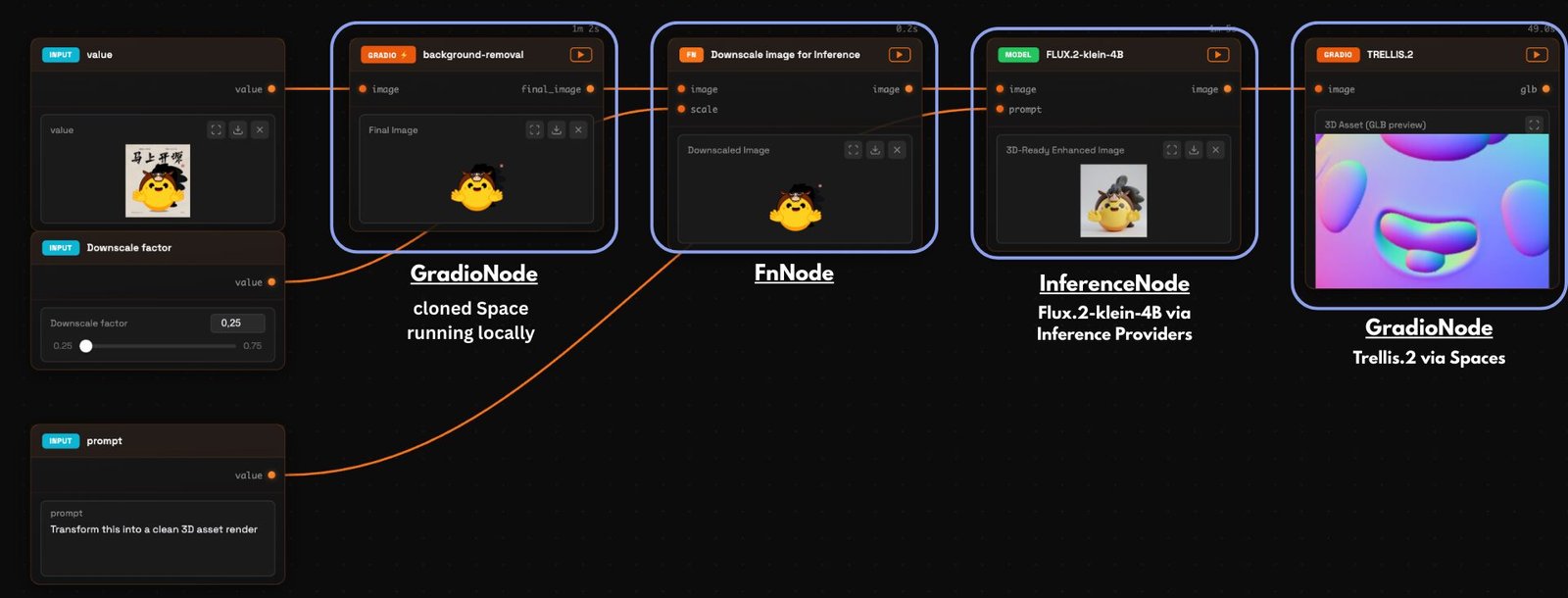
Daggr is built to support rapid experimentation within AI applications, paving the way for innovative model-building experiences. The goal is transparency in functionality, allowing users to navigate new challenges with confidence and learning outcomes.
Daggr automatically saves workflow state, input values, and cached results. By focusing on these foundational elements, it fosters an environment conducive to growth, enabling teams to grasp intricate computational relationships clearly.
The library supports calling Gradio Space API endpoints and running custom Python functions. With these capabilities, developers can tailor their workflows to accommodate evolving project needs seamlessly.
Daggr integrates effortlessly with Gradio Spaces, creating a bridge between workflow creation and model deployment.
With Daggr, you can rerun individual steps of a workflow without executing the entire pipeline, empowering speed and flexibility in testing. The incremental creation and testing of workflows can encourage ongoing exploration and innovative approaches within AI.
Daggr automatically generates a visual canvas where you can inspect intermediate outputs, providing a clear view of the workflow stages. This clarity builds a better overall understanding of the data and processes at play.
Daggr is a new, open-source Python library for building AI workflows. A community-centered approach is encouraged to share insights and improvements that can enhance the progression of the library.
As the library is currently in beta, users should anticipate some changes in APIs between versions. This is common in rapidly evolving tech environments where new features and improvements are consistently being developed.
Visual Representation of Workflows
The visual canvas feature not only helps in troubleshooting but also serves as an educational tool, allowing new users to comprehend complex workflows visually. By improving the clarity of each workflow step, Daggr enhances the overall user experience.
Moreover, the visualization helps maintain workflow consistency as users can monitor changes made throughout the development phase, fostering better collaboration among team members. This is essential for ensuring that collaborative efforts yield consistent and reliable results.
What Happens Next
Looking ahead, Daggr’s development team plans to refine its capabilities based on user feedback. As it continues to evolve, users are expected to likely see enhanced functionalities that are also expected to support even more complex AI workflows.
Beta testers are encouraged to contribute their experiences to help shape Daggr’s future, ensuring it meets the needs of a diverse user base interested in AI and machine learning solutions. Continuous feedback loops cultivate a responsive development atmosphere that can adapt to varying user needs.
Expanding Use Cases
Furthermore, as more developers adopt Daggr, we can expect a growing community that shares best practices and custom functions. This communal knowledge may foster additional resources and educational materials, solidifying Daggr’s position in the open-source AI landscape.
The combination of community-driven enhancements and formal updates from the Daggr team promises ongoing improvements to user experience, further setting Daggr apart from other workflow automation tools. Cultivating this synergy can enhance user engagement and propel the growth of best practices.
Why This Matters
In an era where efficient AI workflows can significantly influence project outcomes, Daggr offers a valuable solution by lowering the entry barrier for non-experts and enhancing productivity for seasoned developers. By democratizing access to advanced AI tools, Daggr can help pave the way for innovative applications in various sectors.
By focusing on visual inspection and streamlined processes, Daggr aids in increasing accessibility to AI technologies, paving the way for innovation in diverse fields from research to commercial applications. This innovation can drive sustainable growth and lead to groundbreaking solutions.
Community Engagement
“Daggr is built to support rapid experimentation within AI applications.”
This community-driven approach not only solidifies Daggr’s relevancy but also propels the advancements of AI workflows in ways that respond quickly to user needs and changes in technology, ensuring that users remain at the forefront of AI development. As such, Daggr cultivates an excited user base eager to engage and improve.
FAQ
In summary, Daggr stands out in the rapidly evolving landscape of AI development tools. It places an emphasis on usability, visual representation, and the quick iteration of workflows. Users can leverage this powerful open-source library to create, inspect, and manage their AI applications more effectively.

