
Thomson Reuters Agentic Platform — Key Takeaways
- Thomson Reuters transitioned from manual to automated systems using AgentCore, improving operational productivity.
- The platform addresses challenges in providing self-service experiences that previously caused delays.
- AgentCore supports various automation features, including cloud provisioning and network service requests.
- Innovations like the Aether orchestrator enhance context management for AI applications.
- Aether Greenlight ensures human oversight over significant automated processes.
What We Know So Far
Transition to Automation
Thomson Reuters Agentic Platform — Thomson Reuters has embarked on a transformative journey, shifting from cumbersome manual processes to a sophisticated automated agentic system powered by Amazon Bedrock AgentCore. This shift aims to enhance operational productivity across the organization.
The focus on creating an automated system showcases the company’s commitment to modernizing its operations and improving efficiency. Integrating advanced technologies enables teams to achieve tasks more swiftly and with greater precision.
Before the transition, the Platform Engineering team faced significant challenges in providing self-service capabilities, often bogged down by human error and delays. These obstacles hindered the workflow and efficiency of teams. The aim of this transformation is to streamline operations and accelerate response times.
AgentCore’s Capabilities
Amazon Bedrock AgentCore is central to this automation. It offers foundational orchestration capabilities that facilitate intelligent interactions and efficient decision-making among agents, paving the way for streamlined operations.
The system automates repetitive tasks, including cloud account provisioning and network service requests, which allows engineers to focus on higher-value projects. This operational shift not only lifts the burden from personnel but also leads to a more agile response to industry demands.
Key Details and Context
More Details from the Release
The organization aims to replicate the agentic capability across teams, enhancing productivity and operational excellence.

“Our engineers were spending considerable time answering the same questions and executing identical processes across different teams,”
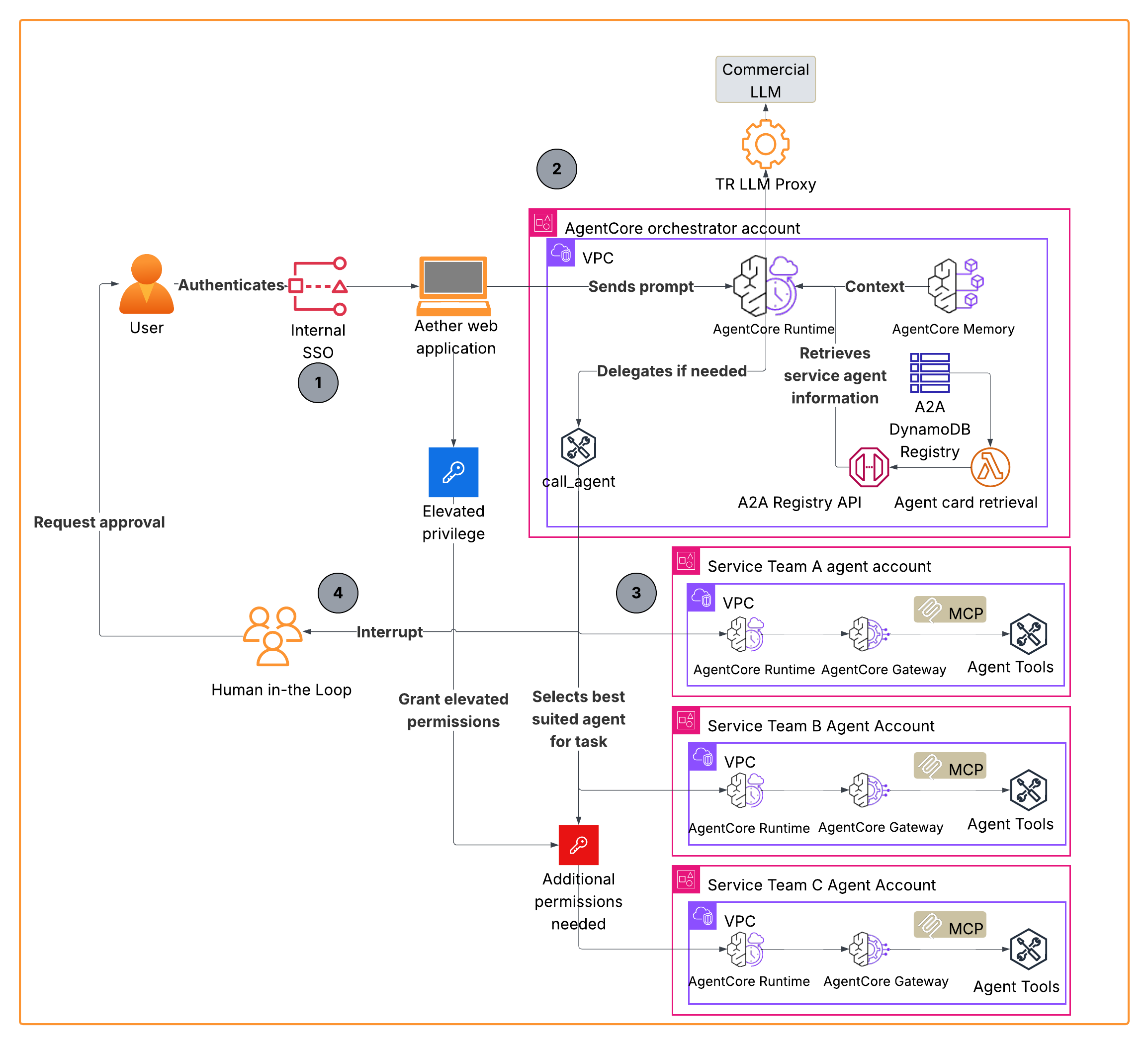
Thomson Reuters implemented a validation service called Aether Greenlight to ensure human oversight on critical operations.
The Aether orchestrator service uses a modular design and integrates with the AgentCore Memory service for context management.
Furthermore, the design of the agentic system is intended for non-technical users to create and deploy AI-powered automation, ensuring accessibility to a wider audience within the organization.
AgentCore provides foundational orchestration capabilities that enable intelligent decision-making and agent-to-agent communication.
The automation implemented includes specialized agents for cloud account provisioning, database patching, and network service requests. With these advancements, Thomson Reuters is better positioned to handle future challenges in technology integration.
The Platform Engineering team at Thomson Reuters faced challenges in providing self-service experiences due to manual processes causing delays. Overall, their proactive approach has led to the realization of significant operational improvements.
Innovative Design for Non-Technical Users
A highlight of the Agentic Platform is its design, which empowers non-technical users to create and deploy AI-driven automations. This democratization of technology fosters creativity and innovation within various teams across Thomson Reuters.
The modular architecture allows for customizable setups, catering to the specific needs of different departments while maintaining consistency in functionality. Such flexibility ensures that diverse teams can optimize their performance according to specific operational requirements.
Aether Orchestrator and Memory Service
Integral to the system is the Aether orchestrator service, which employs a modular design that integrates seamlessly with the AgentCore Memory service. This combination facilitates efficient context management, ensuring that agent interactions are informed and relevant.
This structured communication is crucial for the performance of automated agents, enabling them to work together effectively as they handle complex tasks. By maintaining context, agents are better equipped to execute tasks that require high levels of coordination.
What Happens Next
Widespread Adoption Across Teams
The vision is not just to implement this agentic capability in isolated instances but to replicate it across diverse teams within Thomson Reuters, creating a cohesive operational ecosystem.

As more teams leverage these automated tools, the organization anticipates significant improvements in productivity and service delivery. Executing this vision effectively could lead to enhanced levels of employee satisfaction due to reduced workloads.
Ensuring Security and Compliance
To ensure the stability of operations, Thomson Reuters introduced Aether Greenlight, a validation service that provides an essential layer of human oversight for critical processes. This maintains security and compliance standards while enabling the flow of intelligent automation.
Why This Matters
Significant Impacts on Operations
The move towards automated systems marks a significant turn in how organizations operate in a technology-driven landscape. With tools like Amazon Bedrock AgentCore, companies can elevate their operational efficiency and redefine their service capabilities.
“We needed a way to automate these interactions while maintaining our security and compliance standards.”
This creates not only internal benefits but also positions organizations like Thomson Reuters to deliver better value to clients and stakeholders. Moreover, leveraging automation enables businesses to be more responsive to the ever-evolving market demands.
The Future of Agentic Platforms
As industries evolve, the expansion of AI-driven automation tools is essential. Thomson Reuters stands as a case study in navigating these changes effectively, providing a template for others looking to adopt similar systems.
Ultimately, this evolution signals the increasing reliance on AI in everyday business functions, making automation a critical element for future success. The ability to adapt to technological advancements is expected to determine organizational resilience in the years to come.
FAQ
Common Questions
The following frequently asked questions provide insights into Thomson Reuters’ Agentic Platform:

