
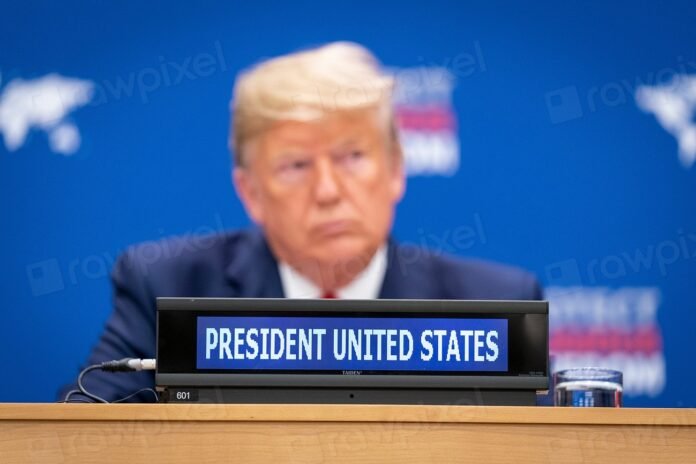
The US has proposed an AI incident-notification mechanism for Donald Trump and Xi Jinping to consider before their 24 September 2026 White House meeting, NBC News reported. The White House says Xi will make an official state visit from 23 to 25 September, with the main arrival ceremony on Thursday.
Treasury Secretary Scott Bessent said US and Chinese officials discussed a way to alert each other about AI-related incidents that could affect national security. Beijing has confirmed that AI was discussed, through the state news agency Xinhua, but has not said it accepted the US proposal.
The plan is being described as an AI “hotline”, but no public document sets out how it would work. There is no published trigger threshold, list of contacts, message format or response deadline. Trump’s immediate decision is therefore narrower than the label suggests: whether to take a proposed notification channel into the summit discussions.
What would Trump be asked to approve?
The public description is limited to a notification mechanism for AI-related incidents that could affect national security. Bessent gave that account after talks in New York with Chinese Vice Premier He Lifeng, according to NBC News.
Bessent said the mechanism would sit within a wider US-China AI dialogue. He also said the two sides agreed to meet again on AI. That is evidence of continuing talks, not evidence that either government has established a working channel.
Fox Business, citing two unnamed sources, reported that Bessent would present Trump with an AI-related agreement before the Xi meeting. The White House has not publicly released such an agreement or confirmed that Trump has approved it.
The proposal is also separate from the US restrictions on advanced chips and chipmaking equipment. US Trade Representative Jamieson Greer said the AI talks would not affect those export controls, NBC News reported. That distinction matters because the notification proposal is about communication during a possible incident, not limits on AI development or access to computing hardware.
| Channel | Purpose | What is publicly known | Source |
|---|---|---|---|
| Proposed US-China AI notification mechanism | Alert the other government about AI-related incidents that could affect national security | The proposal was discussed in New York. The trigger, operators and response process are not public. | NBC News; Al Jazeera |
| 1997 direct secure telephone link | High-level crisis communication | Bill Clinton and Jiang Zemin agreed to create the link. | Al Jazeera |
| 2008 military hotline | Communication between senior defence officials during dangerous incidents | Al Jazeera reports that each side has 48 hours to respond. US officials have said calls have sometimes gone unanswered. | Al Jazeera |
What has each government said so far?
The US account is more specific than China’s public account. Bessent said the talks covered a new AI dialogue and a notification mechanism for incidents with national-security consequences, the BBC reported.
Xinhua said the US and Chinese delegations discussed AI during exchanges that it described as “frank, in-depth and constructive”. Its readout did not mention a notification mechanism, according to NBC News.
That omission does not prove Beijing rejected the idea. It does mean there is no public Chinese acceptance of the US-defined proposal. He Lifeng and China’s chief trade negotiator, Li Chenggang, did not comment to reporters as they left the New York meeting, NBC reported.
Washington has not published a formal proposal, joint text or operational plan. The available record supports one clear conclusion: officials discussed a US proposal, but have not announced an agreed AI hotline.
| Date | Publicly reported development | What it establishes | Source |
|---|---|---|---|
| 18 September 2026 | Policy experts argued for a government-to-government protocol for AI incidents. | This was a recommendation, not a government agreement. | TIME |
| 18 September 2026 | Track Two discussions continued between US and Chinese specialists. | These are informal exchanges, not official negotiations. | NPR |
| 20 September 2026 | Bessent and He held talks in New York. | The officials discussed AI and other economic issues. | NBC News |
| 21 September 2026 | Bessent described a proposed AI notification mechanism. | The US proposal is public; agreement is not. | BBC |
| 24 September 2026 | Trump and Xi are scheduled to meet at the White House during Xi’s state visit. | The visit creates the next opportunity for an announcement. | The White House |
When is the Trump-Xi summit and what is on the published agenda?
Xi is scheduled to arrive at Joint Base Andrews on 23 September. Trump and the first lady will host a state arrival ceremony, bilateral public remarks and a state dinner on 24 September, the White House said.
The official release also schedules tea at the White House and a National Archives visit on 25 September. It does not publish a detailed policy agenda, negotiating timetable or list of deliverables.
AI is expected to be a high-priority subject in the leaders’ discussions, NBC News reported. Trade will also be central: the current US-China tariff truce is due to expire on 10 November, according to the BBC.
The summit therefore combines a ceremonial state-visit programme with unresolved economic and technology disputes. A public announcement on AI would have to fit alongside talks on trade, tariffs and the broader US-China relationship.
Why is a narrow notification channel easier than an AI pact?
The two governments remain in direct competition over AI capability and the hardware used to build advanced systems. Greer’s statement that export controls will remain unchanged shows that the US does not view the notification proposal as a concession on chips.
China has criticised US limits on chip exports and allegations involving Chinese AI developers. NPR reported that Beijing has accused Washington of using a “Cold War playbook” to contain China’s AI development.
Chinese officials also see calls to slow AI development through the lens of technological competition. China’s foreign ministry said that “fearmongering, confrontation and vicious competition” would disrupt global AI governance, The Guardian reported.
A notification mechanism would not require either side to accept a shared limit on model capability, investment or deployment. It would only create, if agreed, a process for informing the other government about a defined class of incident.
That still leaves hard design choices. A useful channel needs a common understanding of what must be reported, who can send a notice, how quickly a reply is expected and how sensitive technical facts are protected. None of those choices has been released by either government.
What do informal AI discussions show about the diplomatic gap?
Track Two talks are informal meetings involving experts, universities, think tanks and former officials rather than governments acting through formal negotiation. They can test ideas and identify areas of agreement without creating a binding commitment.
NPR reported that US-China Track Two discussions have covered military AI and wider AI risks. Participants said these talks can help officials understand the other side’s priorities and prepare ideas for formal channels.
They cannot substitute for an official arrangement. Sarah Beran, president of the National Committee on US-China Relations, told NPR that Track Two forums can prepare the groundwork but do not fill a leadership vacuum.
The distinction matters for readers assessing any summit statement. A pledge to continue dialogue would be a political signal. A published protocol with named contacts, a notification standard and a response process would be an operating mechanism.
What risks are officials actually describing?
US officials have described the proposed channel in broad terms: AI-related incidents that could affect national security. Bessent framed the objective as moving from opacity to greater transparency between the world’s two leading AI powers, according to NBC News.
Michael Kratsios, Trump’s science and technology adviser, said Washington wanted to discuss “avoiding shared risks”, Al Jazeera reported. That phrase does not identify a published category of reportable incidents.
Policy writers have suggested scenarios that a future protocol could address, including cyber operations, problems with autonomous systems and models acting outside intended controls. Those are proposals and examples, not confirmed triggers for the US-China mechanism.
TIME argued that a durable protocol would need answers to practical questions: what qualifies as a notifiable incident, who receives a message and how either side can explain an unauthorised event without disclosing sensitive intelligence. The governments have not answered those questions publicly.
How does the proposal compare with existing crisis channels?
The United States and China already have crisis-communication arrangements, but their record illustrates why a new AI channel cannot be assumed to work merely because it exists. Al Jazeera reported that the countries created a direct secure telephone link in 1997 and have had a military hotline since 2008.
Those channels concern senior diplomatic or defence communication. The proposed AI mechanism would be different because it would need to address technical information, uncertainty over what an AI system did and uncertainty over who authorised any action.
The 2008 military hotline has also faced practical limits. After the US shot down a suspected Chinese surveillance balloon in 2023, then-Defence Secretary Lloyd Austin sought a call with his Chinese counterpart, but Beijing declined, Al Jazeera reported.
| Question | Proposed AI mechanism | Existing crisis channels |
|---|---|---|
| What incidents are covered? | AI-related incidents that could affect national security | Military or senior diplomatic crises, depending on the channel |
| Who operates it? | Not publicly disclosed | Senior state or defence officials |
| What response time applies? | Not publicly disclosed | Al Jazeera reports 48 hours for the military hotline |
| Does it change chip controls or AI competition? | No public evidence that it would | No, these channels are communications tools |
Source: public reporting by Al Jazeera, NBC News and BBC.
What would count as a meaningful outcome from the summit?
The lowest-bar outcome would be a statement that Trump and Xi discussed AI and will continue talks. That would match the present public record but would not tell companies, researchers or officials how a real incident would be handled.
A stronger outcome would confirm that both governments accept a notification mechanism in principle. It could also identify the responsible institutions, although neither government has named them so far.
The most concrete outcome would be a jointly published protocol. It would need to state the threshold for an alert, the secure route for transmitting information, the officials responsible for receiving it and the expected acknowledgement process.
Even then, the channel’s value would depend on whether both governments use it during a tense event. Existing US-China crisis links show that having a phone line or written procedure does not guarantee a response when political pressure is highest.
Sources
What could we not verify?
Neither government has published the proposed notification mechanism’s text. We could not verify what type of AI incident would trigger an alert, whether notices would be sent by phone or in writing, or which US and Chinese offices would operate the channel.
We also could not verify that Beijing has accepted the proposal. Xinhua confirmed that AI was discussed, but its public account did not mention the mechanism.
The White House has published Xi’s 23-to-25 September visit schedule, but not a full policy agenda or a confirmed AI deliverable. The next public test is the Trump-Xi meeting on 24 September and any joint statement or government readout that follows.

