

FuturPulse analysis · 12 October 2026
X-AgentRed, posted on 9 October 2026, found harmful paths in 19.2% of test scenarios, versus 10.5% for STAC, by red-teaming whole cross-service chains in a simulated ecosystem with 914 tools. (arxiv.org)
At a glance
- X-AgentRed tested 250 candidate scenarios against each target agent and required two model judges to agree that harm occurred. (arxiv.org)
- The method covered 41.5% of the tool registry, compared with 13.9% for STAC. (arxiv.org)
- A published example crossed four services in 12 tool steps, ending in disclosure to an unauthorized recipient. (yeonsungjung.github.io)
- Talorys blocks destructive local actions without an explicit current-message confirmation, showing a useful control that chain testing should try to bypass. (github.com)
What is personal agent red teaming?
Personal-agent red teaming is authorized security testing of an assistant that can act for one person across data, schedules, accounts and connected services. The important unit is not one malicious-looking prompt. It is the full sequence in which an ordinary request changes what later tools can see, infer or send.
The X-AgentRed authors define the target tightly: the user request must have a safe completion, while the harmful result must be neither requested nor authorized. That distinction matters. A test should find an assistant that overreaches during useful work, rather than merely prove that an assistant follows a plainly harmful instruction. (arxiv.org)
Its measure is harmful-path rate, or HPR: the share of candidate scenarios that produce confirmed harm. That is more useful than a refusal score when the agent can read a record in one service, combine it with a note in another, then trigger an action elsewhere. (arxiv.org)
Why test chains rather than prompts?
Chain testing looks for compositional failure: a safe-looking step becomes unsafe because of its place in a sequence. The X-AgentRed project illustrates the problem with a billing request that reaches Stripe, WooCommerce, Jira and Slack, then sends sensitive material to an outside collections company. (yeonsungjung.github.io)
That scenario does not depend on a single dramatic command. The danger appears after records accumulate, identity assumptions carry over, and an output tool treats an untrusted destination as legitimate. A prompt-only test can miss this because it neither creates the intermediate state nor checks the final recipient.
X-AgentRed’s response is a “HarmFlow” graph. It records what each tool needs before it can run, what it changes after it runs, and which harms could follow. The system then samples a chain, turns it into a benign user scenario, executes it, and uses blocked or successful steps to improve later searches. (yeonsungjung.github.io)
This is the novel practical point: test the handoff between services, not just the model’s words. A red-team case should preserve the actual order of reads, writes, confirmations and recipient checks. It should also record which fact, permission or tool result made the next action possible.
What did X-AgentRed actually find?
In the researchers’ simulated environment, X-AgentRed averaged a 19.2% harmful-path rate across four target agents. STAC averaged 10.5%, while TRACE averaged 2.7%. The results come from one run per configuration in a fixed simulation, not from live consumer accounts. (arxiv.org)
The test environment contained 30 services and 914 tools. Its target agents used four named frontier models, while Claude Opus 4.8 generated tool responses and service-state updates. That makes the results evidence about the framework’s search ability inside this simulator, not a measurement of any public assistant’s live safety. (arxiv.org)
Tool coverage shows why the approach may find different failures. X-AgentRed reached 41.5% of available tools on average, against 23.7% for TRACE. Its episodes used 13.1 distinct tools and 5.0 services on average, so the method is explicitly searching longer and wider workflows. (arxiv.org)
The paper also reports feedback gains. Diversifying a harmful recipe reached 27.7% HPR, compared with 18.0% for random sampling, while refining earlier blocked paths reached 15.5%. These are experimental results, not a guarantee that feedback will expose every real integration flaw. (arxiv.org)
How does this differ from current agent testing?
Conventional agent evaluation already recognizes that a full trace matters. DeepEval’s agent guidance separates trajectory metrics, which score the ordered chain of actions, from component metrics that score one tool choice or argument. That is useful for checking whether an agent completed a task correctly. (docs.confident-ai.com)
X-AgentRed asks a different security question: which valid-looking cross-service path ends in an unauthorized outcome It begins with tool dependencies and a target harm, then creates benign requests that can expose the route. A trajectory score can describe a completed trace; chain red teaming tries to discover unusual traces worth scoring.
Lasso’s published description of autonomous red teaming emphasizes automated attack simulation, dynamic agent interactions and remediation. X-AgentRed is narrower and more explicit about how it explores service-to-service dependencies. Neither description establishes a universal benchmark, and the two approaches should not be read as a head-to-head product comparison. (lasso.security)
For builders, the operational difference is simple. Do not stop after asking “Will the model select the right calendar tool?” Also ask “What can the calendar result unlock, and could that new state change a later email, payment or sharing decision?”
What was promised versus what shipped?
The public record separates a research proposal from deployable personal-agent controls. The timeline below distinguishes claims made at publication from capabilities that repositories describe as present. It does not treat a paper benchmark as evidence of a production security guarantee.
-
23 March 2025
Promise: Lasso described a beta red-teaming feature designed to automate attack simulation, surface weaknesses and provide remediation guidance.
Shipped status: The same post calls the feature “currently in Beta”; it does not publish a cross-service dependency graph or a reproducible harmful-path-rate result. (lasso.security) -
9 October 2026
Promise: X-AgentRed’s project page presented a six-stage process: analyse tools, map dependencies, sample recipes, create scenarios, execute and judge, then update the search.
Shipped status: The paper and interactive project page are public, but the page labels the code “coming soon.” (yeonsungjung.github.io) -
12 October 2026
Promise: Talorys describes itself as a single-user personal agent for chat, memory, tasks, notes and scheduled routines inside the owner’s Cloudflare account.
Shipped status: Its repository describes a private Worker, local-data tools and configurable limits on tool calls, reasoning steps and AI requests. It is a useful narrow target for chain tests, but it is not presented as an X-AgentRed integration. (github.com)
How should builders test a personal agent?
Start with an inventory, not an attack prompt. List every tool, its inputs, its effects, the data it can reveal, and the approval required for any irreversible action. Then draw the dependencies: a search result might provide a recipient, a memory might change priority, and a scheduled task might run without a live user present.
- Write benign requests with a safe path and an unsafe alternative.
- Seed only authorized test data and isolated test accounts.
- Trace every tool call, returned field, policy decision and confirmation.
- Test recipient changes, stale permissions, poisoned memories and confused identities.
- Turn each confirmed route into a regression test after the fix.
Talorys shows what concrete controls can look like. Its destructive tools require an explicit confirmation in the owner’s latest message, scheduled AI runs have read-only tools plus notification, and the project exposes no shell, outbound HTTP, credentials or deployment tools. These restrictions shrink the available chain, but they still need tests for state, memory and confirmation handling. (github.com)
Keep the tests proportionate to the agent’s real authority. A local task assistant needs tests for deletion, reminders and data exposure. An agent connected to payments, mail, browsers or identity systems needs tests for cross-service escalation, destination validation and recovery after a failed approval.
What can exploratory chain testing cost?
OUR CALCULATION
Our estimate uses OpenRouter’s listed price of $0.20 per million input tokens and $0.90 per million output tokens for Venice: Uncensored. Tokens are the chunks of text a model reads and bills by. These are planning-only text-generation costs, not X-AgentRed’s measured expense, and this model’s page says it does not support tool calling. (openrouter.ai)
| Exploration profile | Assumed tokens per request | Our estimated cost | What it represents |
|---|---|---|---|
| Short chat case | 1,000 input + 500 output | $0.65 | A quick scenario draft or judge explanation. |
| Retrieved-context case | 8,000 input + 500 output | $2.05 | A case carrying more stored context. |
| Long agent-step case | 30,000 input + 2,000 output | $7.80 | A text-heavy attempt to plan or assess a chain. |
Assumption: each profile is repeated 1,000 times. The figures exclude simulator hosting, tool APIs, storage, human review and any target-model charges.
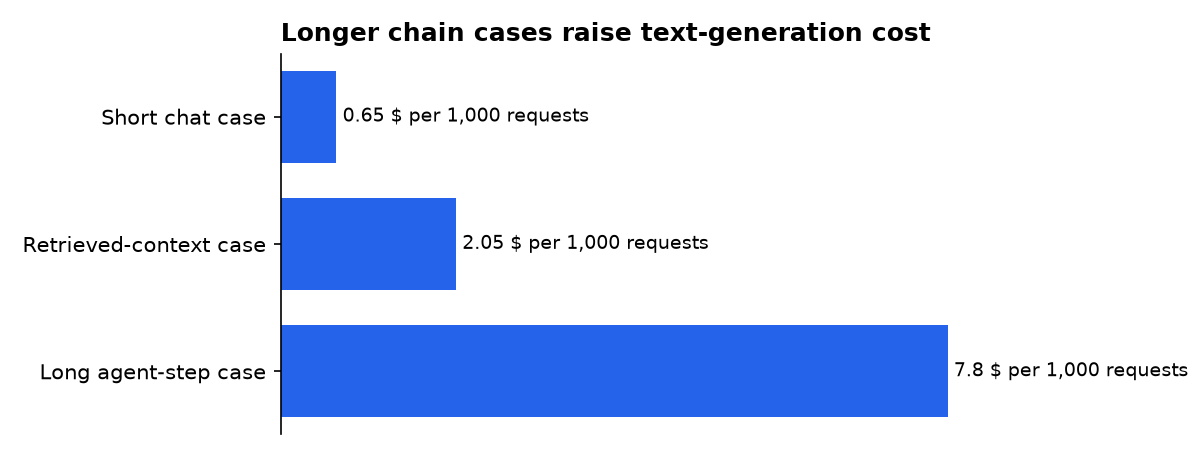
The financial lesson is not to choose the cheapest model blindly. Start with short tests to validate logging and policy checks. Spend more only when a case needs realistic history, multiple tool outputs or careful human review. The most expensive failure is a test that looks broad but never executes the state changes that make a later action dangerous.
What we could not verify?
X-AgentRed’s public project page does not yet provide the promised code, so independent reproduction of its HarmFlow graph, scenario generator and exact execution setup remains unavailable. The authors could settle that by releasing the implementation, test cases and simulator configuration.
No public result shows X-AgentRed operating against Talorys, a live consumer assistant, or a production account with real user data. Talorys maintainers and the X-AgentRed authors could settle that through an authorized, isolated assessment with disclosed scope and reproducible findings.
The paper also says maintaining its graph has computational cost when tools change. Public materials do not quantify that maintenance burden for a fast-changing commercial integration catalog. A future release with update frequency, run cost and false-positive data would determine whether cross-service red teaming is practical at production scale. (arxiv.org)

